

One half of the first and only joint monarchy in Britain
In the shadow of William
William III and Mary II were joint rulers from 1689 until Mary’s death in 1694. They shared equal status and power but Mary’s life has been overshadowed by William’s militaristic presence, her name continuously intertwined with his.
Invited to overthrow her Catholic father, James II, Mary was slandered and celebrated by rival factions for doing so. She was more than merely a political pawn, however.
Admired as beautiful, fashion-forward and intelligent, she was recognised as a competent queen. And through her journals, friendships, personal collections and the image she carefully curated, we can understand more about her and the global context of her reign.
Header image: Portrait of Mary II (detail) after Sir Godfrey Kneller, c.1691-1705. © Royal Collection Enterprises Ltd 2026 | Royal Collection Trust.

Image: A keystone at Hampton Court Palace carved with the entwined initials of King William III and Queen Mary II. © Historic Royal Palaces.
A turbulent time for the Stuarts
Mary was born a Stuart princess in the restoration court of her uncle, Charles II, while the Stuart dynasty was experiencing a tumultuous seventeenth century. In 1649 during the English Civil War, Charles I was publicly executed outside the Banqueting House for tyranny. After a brief interregnum period, parliamentarian Oliver Cromwell then steered a republican state as Lord Protector.
However, the commonwealth did not survive and in 1660, the son of the beheaded king, Charles II, was voted into power. The English monarchy was restored, and Anglican bishops were allowed to be members of parliament once again.
With Charles II came a rebirth of literary culture, vast expansion in trade and colonial enterprise, and an opulent and playful court, characterised by indulgent parties, many mistresses, and gossip aplenty.
Mary's family
Mary was born in 1662 at St James’ Palace to Charles’s brother, James, the Duke of York, and Anne Hyde.
Anne Hyde was a member of the gentry and thus considered a commoner; they had married quickly after Anne fell pregnant with Mary.
Mary’s younger sister, the future Queen Anne, was born two years later.
Image: Portrait of James II with his family. Anne Hyde is seated on the left with Princess Anne in her arms while Princess Mary approaches with a chaplet of flowers. © Royal Collection Enterprises Limited 2026 | Royal Collection Trust

Mary’s early life in England
Mary and Anne lived outside of the court with their governess Frances Villiers, her husband George, and their four children. Mary’s nanny, Mrs Langford, affectionately called ‘Mam’ by Mary, lived with them too. Mary, Anne, and the Villiers sisters gossiped, read romance novels, and practised embroidery together.
Mary’s formal education, controlled by Charles II, included intense religious instruction in High Anglicanism by the trusted chaplain and Mary’s close companion, Dr Edward Lake.
Despite living apart, the young princesses were close to their parents and dined with them often. Although the Protestant Church of England was the official religion of the country, Mary’s mother, Anne Hyde converted to Catholicism in around 1670. She tragically died in 1672 from breast cancer when Mary was only 9.

Image: Traditionally believed to show Princess Mary as Diana, the goddess of hunting. c.1672. Oil on canvas by Sir Peter Lely. Currently hanging in the State Entrance Hall at Hillsborough Castle. © Royal Collection Enterprises Limited 2026 | Royal Collection Trust
Stepmother and friend, Maria of Modena
Mary’s father James, who had also converted to Catholicism during his brother Charles II’s reign, then married 15-year-old Maria Beatrice D’Este of Modena in 1673. He uncomfortably introduced his new wife to his daughters by suggesting they had a new ‘playfellow’. Maria Beatrice was also Catholic, permitted to practice her religion in private, like the Queen Consort Catherine of Braganza.
Maria and 12-year-old Mary became great friends. At Maria’s suggestion, Mary and her sister, Anne performed in the court masque ‘Calisto’, commissioned by Charles to secure marriage matches for the young girls of the court. Many of Mary’s friends performed in this masque with her, including Frances Apsley.
Mary was especially close to Frances, exchanging love letters throughout their teenage years. They used nicknames taken from popular literature to write to one another, expressing their desire through the guise of a heterosexual marriage. Other girls, such as Frances and Mary’s sister, Anne, communicated in a similar way.
Listen to the podcast: Women of the 'Glorious Revolution' - Mary of Modena and Mary II.
A political marriage
This happy time ended abruptly in November 1677, when Mary, aged 15, was told by her father that she would marry her first cousin, William of Orange, the following day. Unbeknownst to Mary, she had been betrothed to Dutch William from the age of nine, in an attempt by King Charles to secure a Protestant alliance between two of the most powerful countries in Northern Europe.
According to the diary of her chaplain, Mary cried all night and the next day. After the wedding ceremony, which was also on William’s 27th birthday, Mary’s uncle, Charles closed the bed curtains wishing for William to get to his ‘worke’ and produce a Stuart heir.
After a teary goodbye, Mary made the journey over to her new home in the Netherlands. Their married life began (and continued) with long periods spent apart, as William was often called away by duties and military campaigns, leaving Mary to worry for his safety. He held the republican position of stadtholder, much like prime minister and as Prince, he was also responsible for the Dutch military forces.
A quiet life in Holland
Mary occupied herself with canal trips on small boats, designing and furnishing her new residences, and prolifically writing letters back home to England. She spent her time with important Dutch noblewomen, and the ladies-in-waiting she had been presented with at the Dutch court.
Mary wrote to friends about her time singing, painting, and praying at the Dutch court. She developed a strong sense of her faith, exchanging bold letters with her father that questioned his Catholicism. Despite their confessional differences, the Duke and Duchess of York, James and Maria Beatrice, visited Mary twice - once during one of two of Mary’s pregnancies, which both ended in devastating loss.
Mary continued to write to Frances Apsley whilst abroad, interspersing flirtatious and playful letters with those that provided Frances with intensive shopping lists that left her in debt, discussed Frances’ miscarriages, and offered condolences for the illnesses of Frances’ parents. They also gossiped about happenings in the English court, including how they thought Anne was being misguided by one of her ladies-in-waiting.
Whilst in the Netherlands, Mary (poorly) kept track of her personal finances in an account book that still survives today. She had a penchant for hair powder, chocolate, and little ‘green birds with red heads’.
Route to the throne
Although Mary struggled to adjust to life in a new country with a new language, she wrote how she ‘grew accustomed’ to the less ceremonial and pompous nature of Dutch court life, which suited both her and William’s private natures.
In 1685 Charles II died without issue and Mary’s father James II was crowned the new king. Mary and her sister Anne were becoming increasingly wary of their father and stepmother’s Catholic influence. Their suspicion increased when, in 1688, Maria Beatrice birthed a male child, a Catholic heir to the throne.
This panicked parliamentarians and seven concerned bishops who dubbed themselves the ‘immortal seven’ wrote to Mary, asking her to take the throne from her father. Mary replied stating she would only rule alongside her husband, perhaps to help share the burden of such a task.
A dramatic coup d’etat followed, known as the ‘Glorious Revolution’. William left for England in November 1688 with a fleet of Dutch ships and effectively pushed James, Maria Beatrice and their children out of the country to France, where they established an opposing Jacobite court in exile. James was distraught at his daughters’ disloyalty.
Tap to zoom

Click to zoom
Joint coronation
Mary travelled to England to assume her crown soon after William arrived in Torbay with his fleet. After James was declared officially abdicated, Mary and William were jointly crowned in a dual ceremony on 11 April 1689.
A whole new set of regalia was made for Mary, whilst James used the traditional regalia that had been used by monarchs for almost a century. Interestingly, Mary wore the coronation crown previously worn by her now-exiled stepmother when she was crowned queen consort to James. The monarchy paid £450 for setting Mary’s crown of state with ‘very large’ diamonds and pearls.
Image: Broadsheet depicting the arrival of William and Mary at Whitehall in 1688. The Banqueting House and Whitehall Palace can be seen in the background. © Historic Royal Palaces.
A constitutional monarchy
Crowning two monarchs at the same time marked the beginning of new traditions within the British monarchy. The Bill of Rights, passed after the coronation in 1689, diverted power away from the crown and into parliament and a Religious Toleration Act allowed dissenting Protestant sects to worship separately from the Church of England. Catholics, however, were firmly banned from practicing.
In 1690, the Regency Act laid out how power was negotiated between the couple. It said that, despite their theoretical roles as equal monarchs and Mary’s greater legitimacy, Mary could only make definitive decisions when William was away, assisted by a council. Even then, these decisions had to be signed off by William.

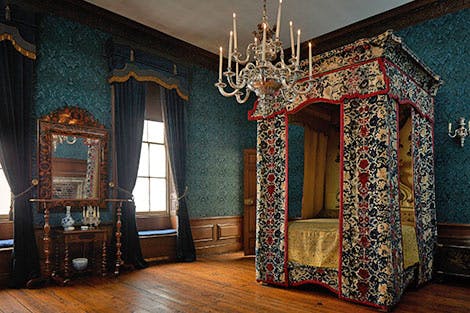
Image: The 'Mary of Modena' bed also known as the 'warming pan bed' in the Queen's Bedroom at Kensington Palace. © Historic Royal Palaces.
Support from sister, Anne
Mary’s sister, Anne, was supportive of Mary and William’s ascent to the throne. She had become distrusting of her stepmother and father and helped spread the rumour of the ‘warming pan scandal’, which claimed that James and Maria Beatrice’s child was not in fact their own but had been smuggled into the royal bedchamber at St James’ in a warming pan.
Anne not only supported her sister politically, but emotionally too. They wrote often when Mary was in the Low Countries, and Mary asked her friends in the English court to look out for her little sister. Anne had also made Mary godmother to her children, who often received presents from her in the post.
Breakdown of her relationship with Anne
However, Mary was increasingly disapproving of the company Anne was keeping. Mary was first unsure of the motivations of Mary Cornwallis in her relationship to teenage Anne, calling her ‘ill compny’. Soon enough Anne favoured Lady Sarah Churchill, the Duchess of Marlborough, whom Mary viewed as an even more damaging influence. She told a friend that Anne was absolutely ‘governed’ by Sarah, who was politically ambitious and keen for her husband, John Churchill, to climb the ranks in the army.
Anne, who was probably having a romantic relationship with Sarah, did not respond well to Mary’s criticisms. Mary’s return and Mary returning to England as queen then began a series of arguments.
Her memoirs from 1689 describe that Anne avoided all opportunities of being alone with Mary after a disagreement about Anne’s revenue. They ‘parted ill friends’ after a confrontation about William’s treatment of Anne a few days later. Despite this, Anne still named her daughter Mary upon her birth in October 1691.
Mary opened her 1692 memoir with ‘This year began with family troubles of mine.’ Mary’s increased paranoia and anger at the actions of the Churchills led to a final argument between her and Anne, after which Anne was asked to vacate her lodgings. They did not reconnect before Mary’s premature death at the end of 1694.
Mary saw her ‘disagreeing [with Anne] as a punishment upon us for the irregularity by us committed upon the revolution’. This act caused her great pain, but she saw it as her duty to her native country.

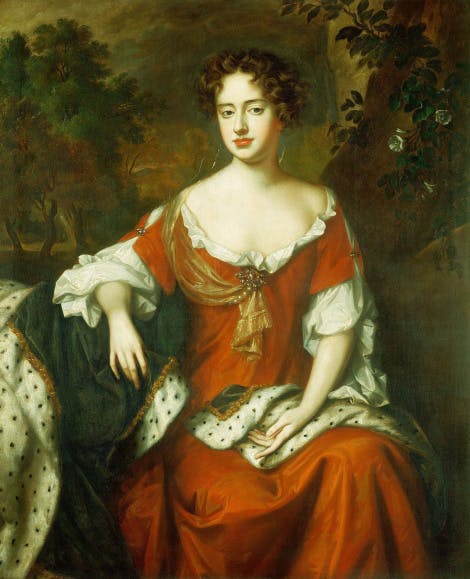
Image: Portrait of Mary II after Sir Godfrey Kneller, c.1691-1705. © Royal Collection Enterprises Ltd 2026 | Royal Collection Trust.
Mary’s power and queenship
As noted, the Regency Act of 1690 dictated that Mary would occupy sole power when William wasn’t present, which was often. As soon as William left for Ireland in 1690, to fight James, who tried to reclaim his throne in the Battle of the Boyne, Mary began attending cabinet meetings.
In the same year Mary wrote that ‘The king…has declared in Parliament that the government was to be left in my hands, and in private had told me who he intended to leave here as his Cabinet Council’. She was sceptical of many of her advisors, especially the secretary of state Daniel Finch, who had wanted her father James as regent. Finch and his wife Anne later became trusted colleagues and friends of Mary’s. From him she purchased Nottingham House, which became Kensington Palace.
The English navy became largely Mary’s charge, as the army was William’s. Mary had planned to establish a hospital for injured seamen in 1693, which was built after her death as the Royal Naval Hospital in Greenwich. However, she was still involved with the army, often meeting troops, receiving generals, ordering artillery for battle, and suggesting how generals progress in battle.
Mary acknowledged that, sometimes, tension occurred during her regency periods:
I entered my administration which was all along unfortunate, and whereas the other years the king had almost ever approved all was done, this year he disapproved allmost every thing.
Mary II
Cultivating her image
Plagued by threats of an uprising by followers of her father, Mary understood the power of paintings and other visual media to strengthen her authority. Renowned portrait artists were commissioned to highlight her beauty, fertility and powerful alliance with William. Multiple copies were made and widely circulated.
Mary also oversaw extensive and ambitious building and garden projects at Kensington Palace and Hampton Court Palace, showcasing the wealth and connections of the monarchy. She adorned these homes with goods she acquired through the Dutch and English East India Companies.

Image: Mary supervised the building of the magnificent Baroque style wing of Hampton Court Palace, designed by Sir Christopher Wren. © Historic Royal Palaces
Declining health
Mary suffered from poor eyesight as she grew older, often complaining of ‘sore eis’. She wrote about her ailments in her diaries and letters. In one, she discusses having a swollen face, which she believed occurred from standing by a window for too long.
Mary called her periods of mental and physical illness her ‘bouts of indisposition’. She often took the waters at Bath or sought retreat at quiet Hampton Court to combat these. Taking the waters was also a common treatment for infertility.
Miscarriages and pressure for an heir
In the first two years of her marriage, Mary lost two pregnancies. There was great pressure for her to conceive an heir to the throne as it was seen as a royal woman’s preliminary role.
There is no evidence to suggest Mary was pregnant after 1678, nor did William conceive with his alleged lover and one of Mary’s ladies in waiting, Elizabeth Villiers. Over time, as she became more convinced of her faith, Mary believed it was God’s will that she would not be a biological mother.

Image: The exterior of the Queen's Gallery at Kensington Palace. © Historic Royal Palaces.
Untimely death
In November 1694, when Mary was only 32, she found a rash on her arm. As soon as her doctors confirmed it was smallpox, Mary sent home the attendants who had not had the disease, saving them from a potentially fatal end.
William was distraught and stayed by her bedside as her illness progressed. At this time in the seventeenth century, smallpox was ravaging Europe. Some of the royal family, including Mary’s sister Anne, had already suffered.
At the realisation of her impending death, Mary burnt many of her personal papers, scared they would fall into the wrong hands. After unsuccessful medical interventions such as bloodletting, Queen Mary II passed away on 28 December 1694 at Kensington Palace.
A huge state funeral followed, one of the largest in British history. The music composed by Purcell for this event is still used in royal state funerals today.
Mary II’s legacy
William wore a lock of Mary’s hair around his neck as he ruled alone, until his own death in 1702. As Mary and William did not have children, Mary’s sister Anne received the throne.
Mary’s story is not frequently remembered today, perhaps because of her role as a woman in a dual monarchy, and her short reign before an untimely death. However, the way parliament functions today is because of Mary and William’s rule. They diverted power from the crown to parliament, thus instigating the constitutional monarchy enacted in the United Kingdom now.
Her astute understanding of gendered power dynamics of the period meant she successfully allayed anxieties after the 1688 Revolution, and negotiated a positive image of the crown against William's poor reputation. All the while, as Bishop Tenison noted in her funeral sermon 'Her Wisdom shin'd very gloriously in Her Administration of Publick Affairs, for which She has received deservedly the Publick Thanks'.
Listen to the podcast
The Multiple Identities of Mary II
In this episode of the Historic Royal Palaces Podcast, Dr Holly Marsden joins Lucy Worsley to explore Mary II's many identities, disentangling her story from that of her husband and co-ruler, William III.
The product of four years of research, Holly’s PhD ultimately aims to disrupt the perception that Mary did not have political agency.
This episode is part of a mini-series about new research at our palaces.
More episodesPodcast transcript
Browse more history and stories
Queen Anne
A surprisingly successful monarch, despite ill health and tragedy
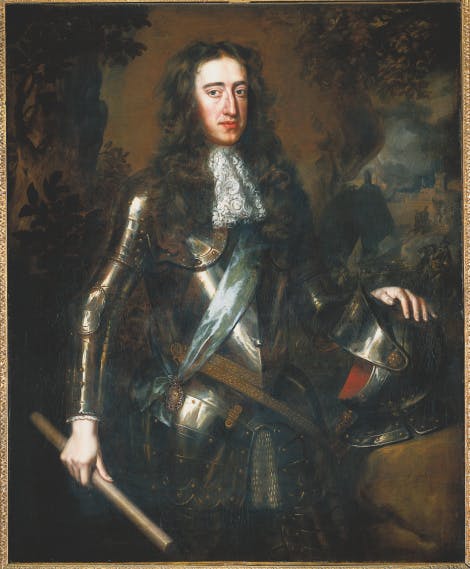
William III and Mary II
England's only joint sovereigns, who transformed Kensington Palace into a royal residence

The story of Kensington Palace
An elegant retreat for Britain's royal family
Explore what's on
- Things to see
The Queen’s State Apartments
Explore the beautiful private rooms at Kensington Palace where Mary II once took her meals, relaxed and entertained.
-
Dates:
Closed until spring 2027 for re-presentation.
- Location: Kensington Palace
- Ticket type: Included in palace admission (Members go free)

- Things to see
William III's apartments
Enjoy the beautiful State Apartments and private rooms of William III at Hampton Court Palace as part of your visit.
-
Dates:
Open
- Times: In line with palace opening hours
- Location: Hampton Court Palace
- Ticket type: Included in palace admission (Members go free)

- Things to see
Privy Garden
Explore the Privy Garden, now restored to its former glory and complete with its intricate Tijou Screen.
-
Dates:
Open (closes 16:00 on 26 September 2026)
- Times: In line with palace opening hours
- Location: Hampton Court Palace
- Ticket type: Included in palace admission (Members go free)
Shop online

Last Princesses of Punjab Collection
A Last Princesses of Punjab decoupage hanging decoration with artwork created by British Asian artist, Kushiaania Janda.
From £7.00