
The truth behind Elizabeth I and the 'Bisley Boy' myth
Tudor myth-busting with Tracy Borman
Date: 12 January 2026
Author:
Tracy BormanReading time: 5 minutes
Elizabeth I’s influential minister Robert Cecil once reflected that the queen was: ‘More than a man, and, in truth, sometimes less than a woman’. Contemporaries were at a loss as to how she, ‘a weak and feeble woman’, could wield power so effectively. They also speculated wildly as to why she chose never to marry – something that still sparks debate today.
Here, Tracy Borman, Chief Historian at Historic Royal Palaces, explores the truth behind the infamous ‘Bisley Boy’ myth – one of the more outlandish theories about Elizabeth I.
What is the ‘Bisley Boy’ legend?
According to the ‘Bisley Boy’ myth, Elizabeth I was really a man. The story goes that in 1542, the 9-year old Princess Elizabeth was sent by her father Henry VIII to Overcourt House in the Cotswold village of Bisley, because the plague was rife in London. Whilst there, she caught a fever and died.
Knowing that the King was on his way to visit his daughter, one of her attendants searched the village for a girl who resembled Elizabeth closely enough to fool Henry. But the only child of the right age and hair colour was a boy, so in desperation they dressed him in the princess’s clothes.
According to the legend, this boy was then raised as the Princess and ruled England in the guise of Elizabeth I – an intriguing but problematic tale.

Image: Elizabeth I as a princess, in around 1546. © Royal Collection Enterprises Limited 2026 | Royal Collection Trust
Where did the myth come from?
The theory was first mooted by Thomas Keble, vicar of Bisley in the 1800s, who recorded that during renovations at Overcourt, he had found an old stone coffin containing the skeleton of a girl aged about nine, dressed in Tudor clothing. It became part of local folklore but gained more widespread renown in 1910 when it was written up by Bram Stoker, creator of Dracula, in his book Famous Imposters. Conspiracy theorists seized upon it as an explanation for why the so-called Virgin Queen refused to marry and have children.

Image: A 19th-century depiction of Elizabeth I, after a portrait by Marcus Gheeraerts the Younger. © Historic Royal Palaces
The problems with the ‘Bisley Boy’ myth
The idea that Elizabeth was actually a man and could have tricked a court and a kingdom into believing she was a woman for more than 60 years is, frankly, preposterous. She herself admitted: ‘A thousand eyes see all I do’. The Queen was constantly attended by her ladies and nothing remained a secret at court for long.
During the first 20 years of her reign, when she was considered as a bride by many of Europe’s princes, Elizabeth’s body was closely scrutinised. She underwent an intimate examination by a physician to prove that she could bear children. Foreign ambassadors even bribed court laundresses to report on their mistress’s periods.
Then there is the fact that Henry VIII might just have noticed if his daughter had been swapped for a male imposter!
In fact, for every account of Elizabeth’s infertility or physical defects, there are others claiming that she regularly slept with her male courtiers and had several bastards by them. A widow named Dionisia Deryck gossiped that the Queen ‘hath already had as many children as I’, but that only two of them had survived into adulthood.
Conversely, the poet and playwright Ben Jonson confidently asserted that Elizabeth ‘had a membrana on her, which made her incapable of man’, and claimed: ‘At the coming over of Monsieur [the Duke of Anjou, Elizabeth’s last foreign suitor], there was a French surgeon who took in hand to cut it, yet fear stayed her.’ He went on to claim that despite this physical impediment, she had ‘tried many’ men.
The Scottish ambassador, Sir James Melville, who knew Elizabeth well, was no less contradictory. Having sparked rumours of the English Queen’s infertility at the beginning of her reign, he went on to boast that he had tried to scare her off childbirth by relating how painful Mary, Queen of Scots’ labour had been. If he had truly believed her to be infertile, then he would have had no need to do so.
What evidence do we have about Elizabeth I’s health?
It is interesting to strip away the rumours and counter-rumours and examine the reliable evidence about Elizabeth’s health, scarce though it is. The medical examinations that were carried out as part of the various marriage negotiations almost all confirmed that Elizabeth was perfectly healthy and had no impediments to bearing children. The laundresses who reported on the state of their royal mistress’s sheets each month attested that she had regular periods.
Read more: Elizabeth I: History's Healthiest Monarch?
However, Elizabeth did display some symptoms that suggest she might have had difficulty conceiving or giving birth, if she had married. Her periods were sometimes irregular –something she had in common with her half-sister Mary I; Elizabeth had witnessed Mary’s phantom pregnancies firsthand.
Elizabeth’s irregular periods (now known as amenorrhea) may have been due to the fact that she ate sparingly and was often described as being ‘very thin’. She was also unusually pale – ‘the colour of a corpse’, according to one account, which suggests that she could have been anaemic.
Elizabeth regularly experienced crippling stomach pains, especially at times of stress. ‘Her Majesty [was] suddenly sick in her stomach’, reported William Cecil on one such occasion, ‘and as suddenly relieved by a vomit.’

Image: A 19th-century illustration depicting Elizabeth I on her way to St Paul's Cathedral on 24 November 1588 to give thanks for England's victory over the Spanish Armada. © Historic Royal Palaces
What we do know is that Elizabeth was tall and slim, but this has led some to speculate further on her health. Sixteenth-century medical experts opined that ‘such [women] as are robust and of a manly constitution’ were likely to be sterile. Ben Jonson’s dubious testimony that Elizabeth, ‘had a membrana on her, which made her incapable of man’ has added to the confusion.
Some recent commentators have even speculated that the Queen might have had Androgen Insensitivity Syndrome (AIS). But there is little evidence to support these theories, and no evidence that Elizabeth had any internal symptoms of AIS.
All in all, the idea that Elizabeth chose not to marry because of some physical impediment – or even because she was really a man – owes more to a Tudor prejudice against female rulers than any sound basis in fact.
How did Elizabeth use her gender to her advantage?
According to the Tudor world view, the only hope Elizabeth had of wielding authority effectively was if she suppressed her feminine instincts and characteristics and channeled her ‘inner Henry VIII’. The Queen did little to discourage this view.
Elizabeth referred to herself time and again in masculine terms to assert her authority. In her ‘Golden Speech’ of 1601, she claimed ‘the glorious name of a King’. Throughout her reign she was a ‘prince’ and ‘the lion’s cub’.
Read more: The Elizabethan era: a golden age?
But Elizabeth also knew when to flaunt her femininity. When under intense pressure to sign Mary, Queen of Scots’ death warrant, she told a parliamentary delegation that she had tried to think ‘what it fitted a king to do’ but that ‘my sex doth not permit it.’ She also created a court based upon the principles of chivalric love, with herself at its centre – delighting, frustrating, enticing and enslaving the male courtiers who flocked to pay her homage.
On other occasions, Elizabeth I invoked both male and female imagery to make her point. When berating her councillors for putting pressure on her, she exclaimed: ‘Had I been born crested, not cloven, you would not speak thus to me!’
This interchanging of imagery was a brilliant tactic. It set her apart from her predecessors and created a unique identity that would assume iconic status both during her own lifetime and over the centuries that followed. She was the Virgin Queen, Good Queen Bess, Gloriana. At once beguiling, strident, charming and, when required, utterly terrifying.
Elizabeth’s earliest biographer, William Camden, claimed that she ‘surprised her sex’. This implies that she triumphed in spite of being a woman, whereas in fact this had been the secret to her success. For all her play-acting, she had a steely determination to succeed as a ‘sole queen’ and once declared: ‘I will have but one mistress here and no master!’ The gender that had been such a disappointment to her father and a disaster for her mother enabled her to stand out in a world dominated by men – and to dominate these men in turn.
More from our blog
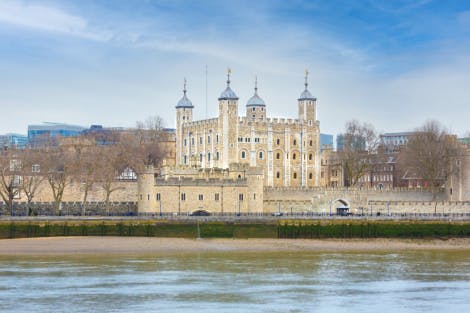
Elizabeth I’s coronation procession from the Tower of London
17 November 2022
Curator Charles Farris recalls Elizabeth’s dramatic procession from the Tower of London to Westminster the day before her coronation.

A model of queenship: Lady Elizabeth's summer with Katherine Parr, 1544
20 September 2024
Tracy Borman travels back to 1544, when Elizabeth spent a happy summer at Hampton Court Palace watching her beloved stepmother, Katherine Parr act as Regent. This visit would have an enduring impact on the young princess.

The death and succession of Elizabeth I: claimants to the Tudor crown
11 April 2025
Elizabeth I's death marked the accession of James VI/I to her throne and the emergence of the Stuart dynasty within England. But this was certainly not a foregone conclusion at the time.