

Henry VIII's 'good servant, and God's first'
Who was Thomas More?
Sir Thomas More is one of the most famous prisoners of the Tower of London. More became one of Henry VIII’s closest friends and advisers and rose to be Lord Chancellor of England. But their relationship turned sour when More refused to comply with the King’s will and he was sent to the Tower.
More was held prisoner in the Bell Tower, one of the oldest parts of the fortress, for a year before he was executed on Tower Hill. He was later venerated as a saint.
A leading theologian, humanist, lawyer and politician, Thomas More was the author of several works, the best-known being Utopia.
Header image: Sir Thomas More bids a final farewell to his daughter, Margaret Roper at the Tower of London, after receiving his sentence. © Historic Royal Palaces

Image: Sir Thomas More. © Historic Royal Palaces
A doomed friendship begins
A young Thomas More meets his future king
In 1499, the future King Henry VIII, then aged just eight, received two distinguished visitors at Eltham Palace, the home of his mother Elizabeth of York just east of London. One was the renowned Dutch scholar and humanist Desiderius Erasmus, and the other a trainee lawyer named Thomas More. More was only 21 years old, but he was described as ‘a man of singular and rare learning’ and was already a rising star in intellectual and humanist circles.
But More’s lively wit and gentle demeanour belied an extraordinarily strict discipline and self-control. At the age of 18, he began wearing a hairshirt next to his skin and his unflinching piety bordered on fanaticism. The contradictions in his character inspired Erasmus’s famous remark that his friend was a ‘man for all seasons’.
Nature had never fashioned anything gentler, sweeter and happier than the character of Thomas More.
Renowned Dutch scholar and humanist, Desiderius Erasmus

Image: Henry VIII at about 18 years old, c.1509. Gift of the Berger Collection Educational Trust
More made an immediate impression on the young prince, who was not yet expected to become king as second in line to the throne behind his older brother Arthur. Knowing Henry’s love of learning, More presented the young prince with a gift of some writing that he had composed.
The pair stayed in touch; when Henry’s beloved mother Elizabeth of York died four years later, More composed a eulogy for her tomb. By then, Henry was no longer just the spare heir: following the death of his elder brother Arthur in 1502, he was first in line to the throne.
Upon Henry’s accession in 1509, More was quick to praise the new 17-year-old King.
Their joy is almost beyond their own comprehension. They rejoice, they exult, they leap for joy and celebrate their having such a king.
Thomas More, writing of the wild celebrations among subjects of the new King Henry VIII
More’s flattery hit its mark. Shortly afterwards, he was appointed Justice of the Peace for Middlesex and a member of the powerful Mercers’ guild. At the end of the year, he represented Westminster in Henry VIII’s first parliament and in 1510 he was appointed one of two under-sheriffs for the city of London.
Thomas More's early career in Henry VIII's court
More’s court career began in earnest when he was appointed to the King’s Privy Council in 1514 and undertook several important diplomatic missions abroad.
Even so, More did not yet feel secure in Henry’s service.

Image: Sir Thomas More in around 1526-7, by Hans Holbein the Younger. © Royal Collection Enterprises Limited 2026 | Royal Collection Trust
So far I keep my place there [at court] as precariously as an unaccustomed rider in the saddle.
Thomas More writing to Bishop John Fisher in 1518
But it was obvious to all that the young King held More in high esteem. Henry would regularly summon him to his private apartments to debate such subjects as ‘astronomy, geometry, divinity, and sometimes of his worldly affairs.’ Often, they would head up to the palace roof to consider ‘the diversities, courses, motions and operations of the stars and planets’.
At other times, More would be invited to take supper with Henry and his queen consort Katherine of Aragon.
Occasionally, the King would visit More at his home, as the latter’s son-in-law William Roper recalled: ‘For the pleasure he [Henry] took in his company, would his grace suddenly sometimes come home to his house in Chelsea, to be merry with him…and after dinner, in a fair garden of his, walked with him by the space of an hour, holding his arm about his neck…as I never had seen him to do to any other except Cardinal Wolsey, whom I saw his grace once walk with, arm in arm.’
There was a price to pay for such favour. Roper recalled that his father-in-law ‘could not once in a month get leave to go home to his wife and children, whose company he most desired, and to be absent from the court two days together but that he should be thither sent for again.’
Henry VIII and More defend the Catholic faith
Henry and More also shared a devout Catholic faith. In the early 1520s they united to defend the Catholic Church by passionately opposing Martin Luther's Protestant reforms.
Assisted by More, Henry wrote and published Assertio Septem Sacramentorum (Defence of the Seven Sacraments) in 1521, earning him the title Fidei Defensor (Defender of the Faith) from Pope Leo X. Two years later, More independently wrote Responsio ad Lutherum (Response to Luther) in which he defended traditional church doctrine and papal supremacy.
In 1520, More was present at The Field of Cloth of Gold, a spectacular two-week meeting between the kings of England and France. He was knighted and made under-treasurer of the Exchequer the following year.
Thomas More and Thomas Wolsey
More’s growing influence made him a rival of Cardinal Thomas Wolsey, who had dominated the court from the beginning of Henry’s reign.
There was little love lost between the two powerful men. After Wolsey called More a fool, More quipped: ‘God be thanked the king our master hath but one fool on his council.’ Wolsey sought to check More’s rise by depriving him of the Exchequer post.

Image: Anne Boleyn. © Royal Collection Enterprises Limited 2026 | Royal Collection Trust
Henry VIII meets Anne Boleyn
From the mid-1520s, Wolsey’s pre-eminence was under threat, thanks to Henry VIII’s growing obsession with Anne Boleyn. The lovestruck King sought an annulment from his marriage so that he could make Anne his wife, and tasked Wolsey with persuading the Pope to agree – a fraught undertaking.
For the first time in his court career, Wolsey failed.
In 1529, Wolsey was stripped of his titles and thrown out of court. More crowed about ‘the great weather which is of late fallen’ and criticised all those who had thought the King ‘had no wit to perceive his [Wolsey’s] crafty doing.’
Wolsey’s loss was More’s gain. He succeeded him as Lord Chancellor and received the Great Seal at Henry’s hands on 25 October 1529. ‘I am loyal to my king, as loyal as anyone on earth can be’, he wrote to his friend Erasmus shortly afterwards.
My inability to approve of [Henry’s] divorce and to argue for it in public in no way detracts from the essential loyalty I feel for him, a loyalty that will keep me from ever saying a public word in opposition to him.
Thomas More, writing to Erasmus in 1529
Those words would come back to haunt More in future years.
An earth-shattering revelation at Hampton Court Palace
Thomas More learns of the King’s break from Rome
From around 1529, Wolsey’s magnificent residence, Hampton Court Palace, passed into Henry’s hands and became one of his most important working palaces. Thomas More would have been a regular visitor, travelling to the palace by river from his Chelsea home.
It was at Hampton Court that Henry told More his marriage to Katherine of Aragon was now thought to be against ‘the written law of God’ and could be annulled without the Pope’s permission.

Image: Hampton Court Palace, where Henry VIII informed Thomas More that the King's marriage to Katherine of Aragon was thought to be against 'the written law of God' and could be annulled. © Historic Royal Palaces
I repaired as my duty was unto the King's Grace being at that time at Hampton Court. At which time suddenly his Highness walking in the gallery, broke with me of his great matter, and showed me that it was now perceived, that his marriage was not only against the positive laws of the Church and the written law of God, but also in such wise against the law of nature, that it could in no wise by the Church be dispensable.
Thomas More to Thomas Cromwell, reporting a conversation with Henry VIII at Hampton Court Palace
Conveniently for Henry, this ‘revelation’ left him free to marry Anne Boleyn.
More fundamentally disagreed with the King’s break from Rome and new marriage. For More’s friendship with the King, and indeed his life, this development would have earth-shattering consequences.
The rise of Thomas Cromwell
More reported his conversation with the King in a letter to Thomas Cromwell, a rising star at Henry’s court. A religious radical and ally of Anne Boleyn, Cromwell was anathema to More, who had devoted much of his career to defending the Roman Catholic Church and hunting down heretics.
The rivalry between the two men would come to define their careers.
More is excluded from Henry’s inner circle
More made no secret of his dislike of Cromwell. At first, Henry was content for More to follow his conscience; provided More did not openly voice his criticism of his marriage to Anne, the King would not pressure him to show public support for it.
Nevertheless, More’s refusal to help his royal master in this most pressing issue meant that he was ousted from the inner circle of councillors, all of whom were occupied with the annulment proceedings. Instead, he allied himself with churchmen and focused his efforts upon helping them to eradicate heresy.
But this uncomfortable situation could not last.
Unable either to openly oppose or prevent a policy that flew in the face of all his beliefs and principles, More resigned the lord chancellorship in May 1532.
An obstacle to the King?
Thomas More doubles down on his opposition to Henry’s reforms
Free from the shackles of royal service, More proceeded to wage a vociferous campaign against government policy and published a series of bitter attacks on Protestant doctrine. He became a powerful figurehead for religious conservatives – in direct opposition to the King.
This dealt a fatal blow to More’s relationship with Henry, who now viewed him as one of the greatest obstacles to his ambitions.
In January 1533, Henry VIII married Anne Boleyn in secret at Whitehall Palace. The annulment of his first marriage had not yet been confirmed, but Anne was already pregnant so he was not minded to wait. In May, Archbishop Thomas Cranmer declared the king’s first marriage null and void.
The following month, Anne was crowned queen. More refused to attend the coronation.
Henry was deeply offended. But, far from being the willing martyr that he is so often portrayed as, More resolved to keep a low profile and do nothing further to provoke the King’s disapproval. Nevertheless, from that day forward there was a growing sense that the former favourite would not long be allowed his liberty.
It would not be long before that theory was tested.
The Oath of Supremacy
The King deals the final blow to More’s allegiance
In April 1534, Thomas More was asked to appear before a commission and swear an oath to uphold the new Act of Succession.
The Act of Succession of April 1534 confirmed that Anne Boleyn was Queen of England and any children that she bore Henry (including their daughter Elizabeth) were heirs to the throne
The sticking point for More was the oath’s preamble, which included a rejection of papal authority – this is known as the Oath of Supremacy.
More told Archbishop Cranmer that he was prepared to swear allegiance to the King and Queen and their heirs, but that he would not sign the preamble.
Henry was in no mood to compromise. He made it clear that More must take the oath or face the consequences.
This Act is like a sword with two edges, for if a man answer one way it will destroy the soul, and if he answer another it will destroy the body.
Thomas More, complaining about the Act of Succession

Image: The lower chamber of the Bell Tower, where Sir Thomas More was imprisoned. © Historic Royal Palaces
Imprisonment at the Tower of London
Furious at More’s ‘obstinacy’, on 17 April 1534 Henry ordered his arrest. His former friend was taken by river from his home in Chelsea to the Tower of London, where he was confined to the cold, damp and gloomy cell at the bottom of the Bell Tower.
'I shall die today and you tomorrow'
Thomas More is sentenced
After a 14-month imprisonment and a much-publicised trial, Thomas More was sentenced to death. He was to be executed on Tower Hill, overlooking his miserable prison.
More’s sentence was commuted from the horrors of a traitor’s death (hanging, drawing and quartering) to beheading, and the day appointed was 6 July.
The evening before, More wrote one final letter to Margaret. He seemed entirely reconciled to his fate and assured her: ‘I would be sorry if it should be any longer than tomorrow, for… long I to go to God.’
After thanking her for the ‘daughterly love and dear charity’ she had shown him during his 14-month imprisonment, he concluded: ‘Farewell my dear child and pray for me, and I shall for you and all your friends that we may merrily meet in heaven.’

Image: A 19th-century depiction of Sir Thomas More bidding a final farewell to his daughter, Margaret Roper at the Tower of London. 'The Meeting of Thomas More with his daughter after his sentence' by William Frederick Yeames. © Historic Royal Palaces
The execution of Thomas More
Early the next morning on 6 July 1535, Thomas More was led from the Bell Tower up to the scaffold on Tower Hill. He appeared calm and in good humour, and even shared a joke with the official who assisted him onto the scaffold: ‘I pray you, master Lieutenant, see me safe up, and for my coming down let me shift for myself.’
In contrast to the executions of other high-profile prisoners, there were few witnesses to Thomas More’s final moments. Henry was too fearful about the mood of the people to allow the event to become the usual crowded spectacle. Perhaps this is why More chose not to make any final speech in defence of his principles.
I die the king's good servant, and God's first.
Thomas More, speaking from the scaffold at his execution
Then he knelt before the executioner and went quietly to his death.
More’s head was set on a spike on London Bridge, as Fisher’s had been. It was then given to his beloved daughter Margaret, who kept it as a saintly relic, preserved in spices. It was later buried with her in the Roper family vault at St Dunstan’s Church, Canterbury.
The rest of More’s remains had been interred in St Peter ad Vincula, the Tower chapel where other high-ranking victims of Henry’s regime lie buried. Just a year after his death, they would be joined by those of Anne Boleyn, the woman who had sparked More’s downfall.

Image: Tower Hill, where Thomas More was among those executed. © Historic Royal Palaces
Henry’s court after More's death
Determined to stop More being made a martyr for the Catholic cause, the King banned any accounts of his execution from being published in England. But within weeks, a French pamphlet was being circulated in London. A rash of other accounts soon left the pages of printing presses across the continent, while in England there was a huge underground market for biographies by the likes of More’s son-in-law William Roper.
These works fuelled the outrage that was spreading across Catholic Europe. Henry’s most powerful rival, Emperor Charles V, upbraided the English ambassador that he ‘would rather have lost the best city of our dominions than have lost such a worthy counsellor.’ Increasingly, it seemed that More was even more troublesome to Henry in death than he had been in life.

Image: Woodcut illustration of Utopia, from a title page of 'Utopia' by Sir Thomas More. Courtesy British Library, G.2398 12
How should we remember Thomas More?
More’s reputation as a martyr reverberated down the centuries. To mark the 400th anniversary of his death in 1935, Pope Pius XI declared him a saint. His brave and principled stand against the mercurial Henry VIII led to him being venerated both in contemporary accounts and, in more recent times, on screen.
More was most famously portrayed by the English actor Paul Scofield in A Man For All Seasons (1966), which cemented his position as a man of conscience in a court filled with grasping politicians – Thomas Cromwell principal among them.
All that changed with the publication of Hilary Mantel’s Booker Prize-winning Wolf Hall trilogy. Now Cromwell was the hero and More his bigoted, self-righteous opponent. Her account does have some basis in the historical record. Writing in the Elizabethan period, John Foxe depicted More as a vicious persecutor of reformers who was actively involved in the torture of heretics.
Although More wrote about a fictional society with religious tolerance in Utopia, in reality he fiercely opposed freedom of conscience and was personally responsible for the burning of six Protestant heretics. He was known to be condescending and often made cruel jokes about his second wife Alice, whom he described as ‘neither a pearl nor a girl’.
The truth lies somewhere in between. More was neither a flawless saint nor a misogynistic bigot, but a complex man with strong religious and moral principles. Ultimately, these would lead to his destruction – and his salvation.
Browse more history and stories
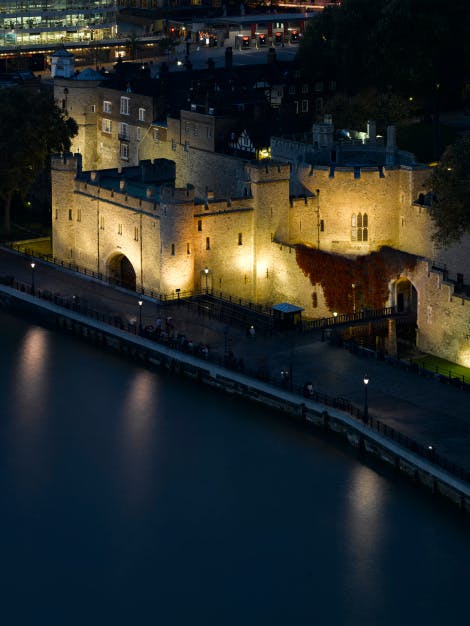
The story of the Tower of London
Iconic fortress, royal palace and infamous prison.

Elizabeth of York
The original Tudor Queen, and wife of Henry VII
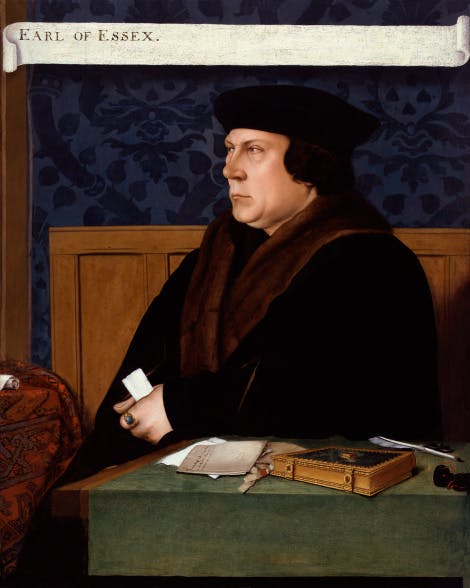
Thomas Cromwell
The life and death of Henry VIII’s 'most faithful servant'
Explore what's on

- Things to see
Line of Kings
Marvel at the historic armour of Henry VIII, Charles I and James II in the Line of Kings at the White Tower.
- Dates: Open
- Location: Tower of London
- Ticket type: Included in palace admission (Members go free)

- Things to see
Tower Hill Execution Memorial
Complete your visit to the Tower of London at the Tower Hill Memorial, in what is now Trinity Gardens. Here, an estimated 125 people were executed– including many prisoners of the Tower.
- Dates: Daily
- Location: Tower of London
- Ticket type: Free

- Things to see
Royal Beasts
Discover why exotic animals were kept at the Tower of London and see how they lived in the Royal Menagerie.
- Dates: Open
- Location: Tower of London
- Ticket type: Included in palace admission (Members go free)
Shop online

Shop Six Wives of Henry VIII
'Divorced, Beheaded, Died: Divorced, Beheaded, Survived' - this best selling range is as colourful as it is informative.
From £15

Shop Kings & Queens of England
Discover our informative and best selling range, inspired by the incredible history of the Kings and Queens of England.
From £4.99

Katherine Parr Decoration
Handmade fabric hanging decoration of Katherine Parr, King Henry VIII's six wife.
£13