

A dynamic and learned queen
Eleanor of Castile was Queen of England from 1272 to 1290, and the first wife of Edward I. Her marriage was one of the medieval period’s most successful royal matches, producing 16 children, including the future Edward II.
Eleanor was an effective and capable queen, as well as highly educated and cultured. She brought the refinement of Castile's court to her English residences, including at the Tower of London. Her passion for the written word, too, remained a constant throughout her life — as queen she was the only contemporary royal in Northern Europe with her own scriptorium (a writing room). However, she was also criticised for her ruthless business practices and land acquisitions.
What were the Eleanor Crosses?
Eleanor is perhaps most famously remembered because of the Eleanor Crosses. Edward was deeply affected by Eleanor’s death in 1290 and constructed 12 monuments — the ‘Eleanor Crosses’ — in her memory. These crosses are renowned to this day, reminding us of her devotion and influence.
Header image: Eleanor of Castile in the Chronicle of Rochester Cathedral Priory (detail). From British Library: Cotton Nero D. II, f.179v
Eleanor’s early life and education
Eleanor of Castile was born in 1241 in the medieval Spanish kingdom of Castile. She was the 12th child of King Ferdinand III of Castile, with his second wife Jeanne de Dammartin, Countess of Ponthieu.
Eleanor was brought up in a Castilian court famed at the time as a cultural hotbed. Both her father and her brother Alphonso X, who succeeded him, were renowned patrons of learning, literature, and music. As a result, Eleanor’s education was likely superior to many of her noble contemporaries — something which perhaps helps to explain the passion for learning and the written word she demonstrated throughout her later life.

Image: Henry III effigy at Westminster Abbey. © Dean and Chapter of Westminster
The marriage of Eleanor and Edward
Like almost all royal marriages in the 13th century, Eleanor of Castile and the future Edward I’s in 1254 was initially a political match.
Since the Norman Conquest in 1066, medieval kings of England also held large amounts of land in France. But by the time Edward’s father, Henry III, came to the throne in 1216, only the territory of Gascony remained.
Friendship between princes can be obtained in no more fitting matter than by the linking of conjugal troth [meaning bonds of marriage]
Henry III, as recorded in Foedera, vol. I, 209. In a 1254 letter.
To the south of Gascony, separated by the Pyrenees, was the Kingdom of Castile. From 1205, the kings of Castile also claimed to be the rightful rulers of Gascony. To resolve this dispute, in 1252 Henry III proposed a marriage alliance; Eleanor, half-sister to King Alphonso X, would marry Edward, Henry III’s eldest son.
Negotiations between the two sides took over a year to complete. Alphonso X agreed to relinquish his claim on Gascony, and in return Henry III gave Edward and Eleanor sizeable lands. With both sides satisfied, the wedding took place on 1 November 1254 at the monastery of Las Huelgas, near the Castilian city of Burgos. Eleanor was just 13 at the time; Edward was 15.
As was common with medieval royal couples, Eleanor and Edward shared ancestors. For example, Eleanor’s great-grandmother and namesake, Eleanor of England, Queen of Castile, was the daughter of Henry II of England and also Edward’s great-aunt.

Image: Eleanor of Castile and Edward in the Chronicle of Rochester Cathedral Priory. From British Library: Cotton Nero D. II, f.179v
What was Eleanor and Edward's marriage like?
Although initially a political union, Eleanor and Edward were devoted to each other throughout their marriage. After their wedding, they lived in Gascony for a year. Their first child was probably born around this time, but died soon after birth.
Perhaps to protect Eleanor from the dangers that pregnancy and childbirth posed at her young age, Henry III attempted to separate the couple the year after their marriage. Eleanor was instructed to go to England, which she did in October 1255, and Edward to Ireland. The young prince, however, disregarded his father’s wishes, and instead followed Eleanor, arriving in London on 29 November 1255.
This desire to be together defined their union, and for most of their married lives Eleanor and Edward were nearly inseparable. They were only apart for significant stretches of time when it was deemed unavoidable. This was unusual for the medieval period, when royal couples typically spent long periods away from each other.
Eleanor of Castile’s children
The most pressing expectation placed upon all medieval queens was having children (especially boys), to promote a stable transfer of monarchical power from one generation to the next.
In this regard, Eleanor of Castile was a highly successful queen consort. Undoubtedly aided by the strength of their relationship, and the constant companionship this created, the couple produced 16 children over 36 years of marriage. Unfortunately, many of their children did not survive infancy, with only six of the 16 outliving Eleanor herself, including the future Edward II of England.
Eleanor’s entry into England
Eleanor arrived in England in early October 1255. On 17 October, she entered the City of London to great fanfare and celebrations. However, according to some writers at the time, some people resented the lavish hospitality shown to people from overseas.
The honours shown to the Spaniards excited the wonder and astonishment of all, and no wonder. The English, therefore lamented that they were held in less esteem than people of any other nation.
Matthew Paris, Matthew Paris’s English History: From the Year 1235 to 1273, vol. III)
Over the course of Henry III’s reign, some of England’s nobility had become increasingly xenophobic – perhaps surprising, considering many of them had family and held lands on the continent. In particular, there was hostility to the favour shown to Queen Eleanor of Provence’s relations.
In this light, Eleanor of Castile and her followers were viewed with suspicion, as foreign individuals who might influence the King and benefit from his patronage. This attitude, coupled with worsening Anglo-Castilian relations, ensured that Eleanor’s initial position at Henry’s court was firmly on the sidelines.
Reform and The Second Barons’ War
Over the 1250s, England’s nobility grew increasingly displeased with Henry III. From 1258 to 1263, powerful barons, led by the King’s brother-in-law Simon de Montfort, tried to coerce Henry into reducing the crown’s power and exiling his French half-brothers.
This period of reform turned violent in June 1263; the Second Barons’ War had begun. Eleanor helped Edward reinforce Windsor Castle, bringing soldiers from her mother’s lands in Ponthieu. Eleanor remained in Windsor with her garrison for over a year.
The King’s defeat: Eleanor in captivity
The King and Prince Edward were defeated at the Battle of Lewes on 14 May 1264 by Simon de Montfort and the rebel barons.
Eleanor was ordered to leave Windsor and join Henry III in captivity. To make things worse, her husband was imprisoned separately at Kenilworth Castle. The only member of the royal family who eluded captivity during this period was the Queen, Eleanor of Provence, who attempted to raise an army on the continent to win back Henry’s power.
Eleanor, as the future queen of England, was an important captive, and she remained under de Montfort’s control for over a year, until an escaped Edward secured victory for the King at Evesham in August 1265.
Eleanor on crusade
In August 1270, following in her mother’s footsteps, Eleanor accompanied Edward east on crusade.
Eleanor and Edward spent 17 months on crusade, based primarily in the city of Acre. During this time, Eleanor gave birth to two children and commissioned a scribe to produce a copy of the famous treatise on warfare, De Re Militari — likely as a fitting gift for Edward.
Eleanor and Edward greatly improved their international reputations by participating in The Crusades — which in medieval Europe was considered an act of piety by the established Church.
Did you know?
The Crusades were a series of religious wars, mainly for Christian control of the Holy Land — lands associated with the Bible. Crusades brought terrible violence, particularly to Muslims, Jews and Christians who disagreed with the established Church.

Image: Edward I. Copyright The Dean and Chapter of Westminster
The assassination attempt on Edward
The most famous episode that occurred during Eleanor’s time in Acre was an attempted assassination of Edward. On 17 June 1272, an assailant attacked Edward in his chamber, stabbing him in the arm with a poisoned dagger. The assassin was killed in the melee, but the wound placed Edward in mortal danger. According to the chronicler Walter of Guisborough, his life was saved by a doctor cutting away the affected flesh.
The romantic legend that grew around the event, however, claims Eleanor saved Edward’s life by sucking the poison from his wound. This story was first recorded around 50 years after the event in the 1320s, and is not supported by contemporary sources. Nevertheless, the legend’s popularity grew over the centuries, and it still contributes today to the royal couple’s romantic reputation.
Eleanor, Queen of England
Eleanor and Edward left Acre in September 1272. They were told of Henry III’s death on 16 November 1272 while travelling through Sicily; Eleanor was now Queen of England and her husband was King Edward I.
Surprisingly, the new King and Queen of England did not rush back to their kingdom. Instead, they travelled through Italy and France for 18 months, finally reaching English shores in August 1274.
Eleanor and Edward’s joint coronation
Eleanor of Castile and her husband’s long-awaited joint coronation on 19 August 1274 was certainly spectacular, although it was not recorded in detail.
The couple likely paraded through the City of London, richly decorated for the occasion, before arriving at Westminster Abbey. There, Eleanor stood on Edward’s right-hand side, as the Archbishop of Canterbury invested her as Queen of England.
In doing so, Eleanor became the first queen to be crowned alongside a king since Eleanor of Aquitaine and Henry II in 1154.
Following her mother’s death in 1279, Queen Eleanor also became countess of Ponthieu in her own right, something that further increased her wealth and status. It also brought new continental lands into the hands of the English crown, as the French county was inherited by the future Edward II following her death in 1290.
The Queen’s household
As queen of England, Eleanor was head of her own household – a complex organisation of 150 people which moved with her and fulfilled her every need.
At the centre was the wardrobe, which distributed her money to the rest of the household. Other departments such as the buttery were in charge of wine, the pantry ensured bread was on hand, and the marshalsea was in charge of her horses and travel.
This structure was modelled on the King’s household and allowed the two to merge when Eleanor and Edward were together, which they often were. Unlike the King’s, though, Eleanor’s household was made up of both men and women. In 1290, for example, she had her own head of the wardrobe, as well as a cook and a barber, but also 13 ladies and damsels, who mostly worked in her chamber.
A clever queen
Eleanor’s pastimes
As well as embroidery and weaving, Eleanor played games, such as tables (backgammon) and chess. She borrowed a chess manual from Cerne Abbey in 1285; the following year Edward gifted her a set of jasper and crystal chessmen.
She was also a keen hunter: she had her own pack of hunting dogs and provided more for her daughter Joan.
But Eleanor’s real love was reading. Uniquely for a northern European royal at the time, Eleanor’s household produced manuscripts in a dedicated ‘scriptorium’. She collected everything from academic and theological works to chivalric and Arthurian romances.
Eleanor as patron
This interest in learning and education was also reflected in her patronage. Together with Edward, she gave generously to both Oxford and Cambridge universities.
Eleanor also founded two Dominican priories in London and Chichester, as well as several others across England and Wales. She also knew many friars personally, and it is likely that many of her children were educated by Dominicans.
Power and influence
Eleanor’s Queenship
During her 18-year reign, Eleanor used her power and influence to advocate for herself and her family.
Eleanor negotiated marriages for her daughters Margaret and Elizabeth to prominent continental lords. She also secured her daughter Eleanor’s betrothal to King Alphonso III of Aragon. However, she was also protective of her daughters, for example, collaborating with her mother-in-law Eleanor of Provence to convince Edward that their daughter should not be married as young as 13.
Medieval queens were also expected to appeal to the king on behalf of others. This common practice, known as intercession, allowed queens to influence events and build support. Many historians have concluded that Eleanor did not engage in this tradition, as no letters of this nature sent from Eleanor to Edward survive, as they do for other queens in large numbers. However, as Eleanor and Edward spent more time together than most medieval royal couples, it is also possible that Eleanor’s intercession was done in person instead.
New luxury at court?
After spending her early years in the sophisticated royal court of Castile, Eleanor brought her rich cultural tastes with her to England.
Writing on her entry into London in 1255, a surprised chronicler called Matthew Paris noted her rooms had been decorated by her father-in-law in a fashion unfamiliar in England: ‘hung with palls of silk and tapestry, like a church, and even the floor was covered with hangings’. Such splendour was apparently met with amazement and even laughter.
Eleanor continued to decorate her residences in this opulent manner throughout her life, with painted walls, decoratively glazed windows and richly coloured candles.
Gardens and fruits
Eleanor also influenced royal gardens, drawing inspiration from the Islamic pleasure gardens she would have frequented in Castile. She hired Spanish and Italian gardeners to install running water features in royal residences, and added exotic birds such as Sicilian parrots, swans and nightingales.
Eleanor even imported new apple and pear varieties from France, which would have graced her table alongside olive oil, citrus fruits, pomegranates and figs.
Did you know?
At Leeds Castle, Eleanor constructed a tiled bathhouse, which likely included a piped water system (the first of its kind in England).

Image: Edward I's Bedchamber recreated at the Tower of London. © Historic Royal Palaces
Wealth, at what cost?
Eleanor’s controversial acquisition of land
Queen Eleanor was an independent landlord in her own right; her lands funded her regal lifestyle and her household.
Funds drawn from her own lands would have provided Eleanor with an independent income, but she would not receive the bulk of these until Edward’s death. Moreover, they would not alone cover her substantial expenses. Eleanor, therefore, was eager to grow her estates during her time as queen.
Did you know?
Eleanor’s many income streams included direct payments from the King’s exchequer and taxes such as the Queen’s gold.
The king would like to get our gold, the queen our manors to hold.
Walter of Guisborough
Eleanor was undeniably effective in acquiring land. By the time of her death in 1290, she had built a substantial, but controversial, portfolio. Eleanor was accused of greed, and her officials were labelled cruel and heavy-handed.
This criticism was likely in part motivated by misogyny. In many ways, Eleanor was exercising effective ‘lordship’ of her estates; had she been male, she may well have been praised.
However, not all criticism levelled at Eleanor was unjustified. One way in which Eleanor acquired land attracted particular contemporary criticism, largely due to the involvement of England’s Jewish community.
The Jewish community in England
After the Norman Conquest of 1066, an important community of Jews had settled in England. This community was protected by the English monarchy and largely flourished during the 11th century. However, royal policies towards the Jews hardened during the 13th century, who faced increasingly harsh legislation and taxation.
Jews lived alongside Christians in towns and cities across England, but they also faced prejudice and violence. The 13th century saw an increase in Anti-Jewish persecution, which culminated in Edward I’s Expulsion of the Jews in 1290.
Did you know?
In 1189, many Jews took refuge inside the Tower of London when the community was attacked after the coronation of King Richard I.
Read more: Jewish Medieval History at the Tower
Much of Eleanor’s land acquisition in the 1270s and 1280s had been achieved through the purchase of Christian debts to Jewish money lenders. These debts had been secured against lands. Having acquired them, Eleanor gave the debtor the opportunity to repay the money they owed. Once Eleanor had acquired these debts she obtained many manors in this way in the 1270s, including Leeds Castle in Kent.
From 1281, Eleanor focused instead on buying land directly. Nevertheless, she continued purchasing some Jewish debts and likely charged interest on them, a practice forbidden by the church. This same year, Eleanor strengthened her relationship with the Jewish community, acting as patron of Cok Hagin, and supporting his appointment to the office of Presbyter Judaeorum – the chief official of the Jews in England. This gave her a foothold in the administration of the Jews but attracted the attention of the English Church.
The Archbishop of Canterbury, John Pecham, wrote to her in 1283 stating that by benefiting from Jewish debts she was committing a ‘mortal sin’.
Eleanor’s business dealings with England’s Jewish community are another example of their complex relationship with the English crown in the medieval period.
Did you know?
A large part of Eleanor’s income came from ‘Queen’s Gold’, a portion of fine payments made to the king. Many of these were made by Jews.
It is said that the illustrious lady queen of England… is occupying many manors of nobles and lands… lands which the Jews extorted with usury [charging interest]…
Pecham writing to one of Eleanor’s officers in 1286
Death and legacy
Eleanor of Castile died following a short illness on 28 November 1290 at Harby, near Lincoln. Her final illness was likely caused by malaria, contracted in 1287.
Edward was profoundly impacted by Eleanor’s death and was plunged into a grief lasting many years. While he loved Eleanor dearly in life, he mourned her equally strongly, stating, 'in death we do not cease to love [her]'.
Eleanor’s funeral procession and burial
Eleanor’s funeral procession to her final resting place was a remarkable showcase of royal grandeur and devotion. The Queen’s funeral procession left Lincoln Cathedral on 3 December 1290, before continuing for 12 nights to London.
Famously, Edward constructed 12 elaborate stone crosses at the locations where Eleanor’s body rested overnight. These Eleanor Crosses have become perhaps the best-known detail of her Queenship, and have helped establish Eleanor and Edward’s marriage as one of medieval England’s most enduring love matches.
On 17 December 1290, Eleanor of Castile’s body was laid to rest at Westminster Abbey. In a final show of devotion, the King constructed three effigies where her body was buried. The spectacular gilt bronze example at Westminster Abbey still survives.
Two days later, Eleanor’s heart was buried at the Blackfriars’ church in London, alongside her son Alphonso’s.
Did you know?
Eleanor’s organs were buried separately, at Lincoln Cathedral – a common noble practice in the 13th century.

Image: Eleanor of Castile's effigy at Westminster Abbey. © Dean and Chapter of Westminster
How is Eleanor of Castile remembered today?
Eleanor of Castile is one of medieval England’s best-known queens. An active consort, she was involved in promoting the interests of her family and her own financial position, as well as the production of the written word in her scriptorium.
While contemporary chroniclers were critical of her land acquisition and business practices, this does not reflect her modern legacy. Instead, she is best remembered for her highly successful marriage to Edward I.
It is clear Edward was greatly impacted by her loss – building the famous Eleanor Crosses in her memory. In doing so, Eleanor of Castile’s romantic reputation as one of England’s most devotional and beloved queens was cemented.
Browse more history and stories

Edward I
Hard working and effective, but ruthless and cruel

Sir Thomas More
Henry VIII's 'good servant, and God's first'
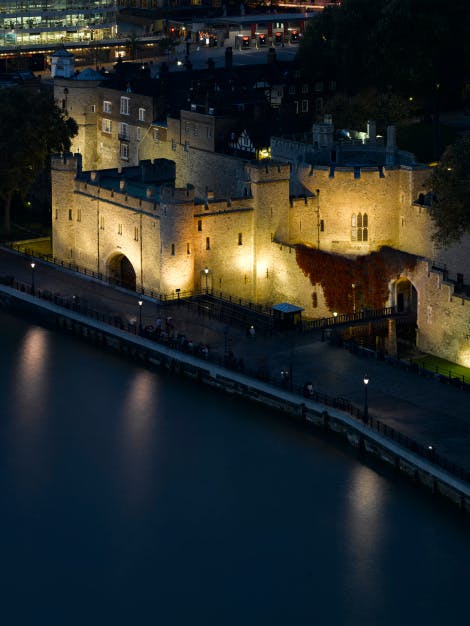
The story of the Tower of London
Iconic fortress, royal palace and infamous prison.
Explore what's on

- Families
- Events
Duke and Disorderly
Discover a fun, family-friendly programme, full of chaos and silliness.
-
Dates:
Until 30 May 2026
- Times: 11:00-16:00 daily
- Location: Tower of London
- Ticket type: Included in palace admission (Members go free)

- Things to see
Line of Kings
Marvel at the historic armour of Henry VIII, Charles I and James II in the Line of Kings at the White Tower.
- Dates: Open
- Location: Tower of London
- Ticket type: Included in palace admission (Members go free)

- Things to see
- Families
Object Handling
Get up close to fascinating historic objects at the Tower of London. Enjoy volunteer-led object handling sessions featuring mail armour, coins, archaeological finds and more.
-
Dates:
Every Monday
- Times: 12:00 - 15:00 (excluding bank holidays and school holidays)
- Location: Tower of London
- Ticket type: Included in palace admission (Members go free)
Shop online

Beano at the Tower of London
Celebrate the Beano at the Tower of London with exclusive gifts and mischievous toys.
From £1.00

Shop Medieval
Step back in time with our medieval inspiration collection, full of fascinating ornaments and homewares for your collection.
From £3.50

Shop Six Wives of Henry VIII
'Divorced, Beheaded, Died: Divorced, Beheaded, Survived' - this best selling range is as colourful as it is informative.
From £15