

Hard working and effective, but ruthless and cruel
A mixed reputation
Edward I was King of England from 1272 to 1307. He restored his family's royal dynasty from crisis to power, was internationally famed as a warrior, built great castles, improved the legal system, and tackled corruption. On the other hand, he also engaged in wars he could not win, left the Crown in debt, and expelled England’s Jewish community.
Edward met many of the expectations of a good medieval king, yet he also oversaw some of the most deplorable chapters in English history.
Header image: Edward I's bedchamber recreated at the Tower of London, in the Medieval Palace that he expanded. © Historic Royal Palaces

Image: A king, likely Edward I, Westminster Abbey. © Dean and Chapter of Westminster
Edward I's early life
Edward was the eldest child of Queen Eleanor of Provence and King Henry III, born on 17 June 1239 at the Palace of Westminster. As was common royal practice, Edward was soon given his own household away from his parents, and as early as August 1239, he had his own chamber at Windsor.
Edward was provided with appropriate noble guardians and children for company, lavish robes, good quality food and wine. By the age of eight, he was hunting in nearby Windsor Forest, where he perfected the skills of riding and using weapons – essential skills for the battlefield.
Although often absent, Edward’s parents took a keen interest in his wellbeing. When Edward was taken ill in 1246, his mother stayed by his side for three weeks until he recovered. The next year he was ill again; his father requested all the religious houses in London to pray for his recovery.
Did you know?
Edward was named after Edward the Confessor, his father's favourite saint. Although common today, this English forename would have been considered a very unusual choice at the time.

Image: Edward commissioned this effigy of his father, Henry III in Westminster Abbey. © Dean and Chapter of Westminster
An impressive youth
Edward grew into a physically impressive man. At 6 foot 2 inches (as confirmed when his grave was opened in 1774) he would have towered above most contemporaries. In 1256, at the age of 16 he competed in his first tournament, from which he escaped uninjured – unlike many of his competitors.
Edward's personality
Cruel and hot-tempered
Edward had a reputation from a young age for cruelty. In the late 1250s, chronicler Matthew Paris recounted a story that, in his youth, Edward had ordered the mutilation of young man for no good reason. Whether this was true or not, he certainly had a hot temper.
At his daughter Margaret’s wedding in 1290, Edward assaulted a squire – later paying him compensation. In 1297, he paid to repair his daughter’s coronet, having thrown it into a fire.
A family man?
Edward took a close interest in the comfort and happiness of his family and enjoyed many popular activities. He enjoyed chess and gifted Queen Eleanor a set made from crystal and jasper – a decorative stone found in many colours. Edward loved hawking and once sent a wax image of a sick hawk to the shrine of St Thomas at Canterbury, hoping for a cure.
He often hired musicians and entertainers for feast days and once paid a harpist to distract him while his surgeon performed an operation. Edward lost a warhorse in a bet to his laundress, Matilda de Wautham, and had to buy it back from her afterwards. Matilda was one of many in Edward’s household who was rewarded with a pension for years of good service.
Did you know?
On Easter Monday, Queen Eleanor’s ladies-in-waiting once took him hostage in his bed, and he paid a ransom to be freed.

Image: Eleanor of Castile and Edward I. From the British Library Collection: Cotton MS Nero D II, f. 183v
Edward's marriage to Eleanor of Castile
Edward had two very successful marriages and appears to have been a loyal and loving husband. While his grandfather, King John, was famous for having many illegitimate children, Edward, like his father, appears to have been monogamous.
Edward married Eleanor of Castile on 1 November 1254 at the convent of Las Huelgas near Burgos, in her native Castile.
Edward was knighted by his father-in-law, Alphonso X of Castile, the same day as his wedding.
Although a diplomatic union, Eleanor and Edward proved an excellent match. They travelled almost constantly together and had at least 16 children – including the future Edward II. When Eleanor died in 1290, Edward was heartbroken and erected 12 monumental stone crosses in her memory – three of which survive today.
Read more: The Royal Household in the Medieval Period
Edward’s marriage to Margaret of France
Edward waited nine years before marrying again. He married Margaret of France, who was 40 years younger than him, at Canterbury Cathedral on 10 September 1299.
Edward took great care of his new queen, who was in turn a devoted wife and nurtured close relationships with all his children. The couple had three children together. When Edward died, in 1307, she commissioned her chaplain to write a Latin eulogy for him.
Did you know?
When Queen Margaret died in 1318, writers called her 'the flower of the French' and 'good without lack'.
A king in training
Edward benefited from coming to the throne later in life, which allowed him to learn from his mistakes. As a young man he was impatient and ambitious, sometimes conspiring against his father.
Edward’s most crucial test came in the Second Baron’s War when rebellious nobles, led by his uncle Simon de Montfort sought to seize the throne. Edward was close to his uncle and initially took his side, before returning to the royalist cause.
Hard lessons learned
Edward is captured at the Battle of Lewes
In May 1264, Henry suffered a bitter defeat against the rebel barons at the Battle of Lewes. This loss was partly caused by Edward himself, who had got carried away in a cavalry charge after a force of retreating Londoners. This left the King’s flank undefended and the battle was lost.
Edward spent much of the next year in humiliating captivity – first at Dover Castle, then Wallingford, and finally Kenilworth.
In May 1265, Edward escaped captivity and met up with royal supporters, including the Earl of Gloucester – who had defected from the rebels’ cause. In August 1265, he finally got his revenge at the Battle of Evesham when the rebel barons were defeated and his uncle brutally murdered. Edward had restored his father to the throne and learnt some valuable lessons along the way.
Edward on crusade
Having helped restore his father to the throne, Edward’s horizons began to broaden. In 1268, Edward ‘took the cross’ – meaning he committed to go on crusade.
The Crusades were a series of religious wars mainly for Christian control of the Holy Land – lands associated with the stories in the Bible. Crusades brought terrible violence, particularly to Muslims, Jews and Christians who disagreed with the Catholic Church. Edward’s mixed reputation had much to gain from going on crusade, which was considered as an act of piety by the established Church.
Edward joined the Crusade of King Louis IX of France in 1270 (the 8th Crusade), which ended soon after it began when Louis died. While most crusaders returned home, Edward continued to the Holy Land. This became known as ‘The Lord Edward’s Crusade’ (or 9th Crusade). While it achieved little, it was an important bolster to Edward’s reputation. When he died in 1307, one writer lamented: ‘Jerusalem, thou hast lost the flower of thy chivalry.’
Did you know?
Edward survived an assassination attack while on crusade. This event helped make him famous around Europe.
Becoming King Edward I
Edward was returning home when he received the word in Sicily that his father had died on 16 November 1272. He did not hurry straight back to England, perhaps still recovering from the attempted assassination. He used the journey back to England as a diplomatic opportunity – meeting many other European rulers including Pope Gregory X in Rome.
In Paris he performed homage to King Philip III, for his lands in France, and tackled a rebellion in his lands in Gascony. He finally landed at Dover on 2 August 1274.
Edward’s coronation
Edward and Eleanor were crowned on 17 August at Westminster Abbey. The coronation ceremony was largely traditional, but the King added a promise to the coronation oath to ‘preserve the rights of the crown’.
After being crowned, according to one chronicler, Edward removed the crown from his head and promised not to wear it again until he had recovered all the lands granted away by his father.
The coronation was followed by lavish celebrations. The streets of London were richly decorated and the water fountain at Cheapside ran with red and white wine for everyone to drink.
Read more: Coronations Past and Present
A hardworking king
Edward wasted little time in getting to work, launching a massive enquiry in October to discover the ‘state of the realm’ – particularly which rights and lands of the crown had been lost. Before the investigation began, many officials, including Sheriffs, were replaced. This wise move gave Edward an opportunity to distance himself from unpopular officials and policies.
The enquiries of 1274/5 produced a series of documents called the Hundred Rolls – which recorded misdeeds of officials and surveyed royal rights and lands. The Hundred Rolls get their name from the ‘hundreds’ – a subdivision of a county or shire which had its own court. Although not completely innovative, the scale of the investigation was impressive. This was the beginning of a long and deliberate process to improve how the realm was governed.
Edward’s parliaments
During Edward’s reign, the role of parliament evolved considerably to help meet the demands of the Crown and hear the complaints and petitions of his subjects. Parliaments were held more frequently and often more productive. Statutes were passed that tackled issues ranging from corruption to tenants’ rights.
Although the Crown’s interests were often at the heart of his policies, Edward displayed awareness of the importance of public opinion. Often short of cash, the King made concessions in parliament in return for taxation.
Wars in Wales
Welsh prince Llywelyn ap Gruffudd had taken advantage of the Baron’s War, to secure Henry III’s acknowledgment of his title of prince in return for a promise of fealty (feudal loyalty). However, Henry had underestimated the independence and individuality of the Welsh people and their customs.
When Edward came to power, Llywelyn began testing the new King: he failed to pledge fealty, began building a new castle on the English border, raised taxes (likely) in preparation for war, and made plans to marry Eleanor de Montfort – Simon’s daughter.
In 1277, Edward invaded Wales with a huge army of 15,000 men. Faced with such a force, Llewelyn made terms with Edward and agreed to pay a massive fine. English powers and jurisdiction over Wales were increased, which was much resented by the Welsh people.
In 1282, war broke out again. Prince Llywelyn was ambushed and killed along with many of his supporters, and the Statute of Wales further increased English control in much of Wales. Despite huge expenditure, Edward faced further Welsh rebellions in 1287 and 1294, and the conflict continued into the 15th century.
Did you know?
The future Edward II was born in Caernarfon in 1284. Edward I gave him the title Prince of Wales, which the heirs of the throne bear to this day.

Image: Beaumaris Castle on the island of Anglesey is famous as the greatest castle never completed. Alan Novelli / Alamy Images
Edward's Welsh castles
Edward built a series of mighty castles in Wales and reinforced existing captured Welsh castles. After the 1277 campaign, Builth, Aberystwyth, Flint and Rhuddlan were built, and then later came Conwy, Caernarfon, and Harlech, and finally Beaumaris which was never completed.
Master James of St George, a Savoyard mason, masterminded the building of Edward’s Welsh castles. They may have met during Edward’s return from crusade.
It's been estimated that Edward I spent nearly £80,000 on building Welsh castles between 1277 and 1304. These castles helped to enforce English power in Wales.
Edward I and the Tower of London
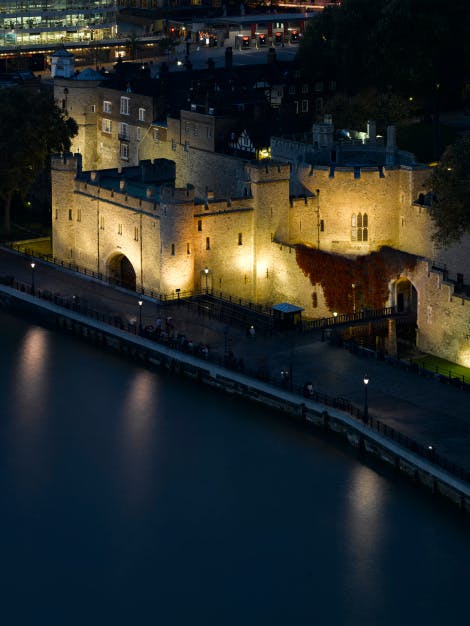
Edward’s other most famous castle building project was at the Tower of London. Edward expanded the fortress dramatically to roughly the footprint we know today. The expansion was carried out under Master Mason John of Beverley – one of the great architects of his day.
Edward built at least nine new towers, added the outer ward, expanded the medieval palace, and dug out a new moat. Edward created the royal mint inside the Tower’s walls where it remained until 1810.
Did you know?
Edward spent over £20,000 on building works at the Tower of London – about half the sum spent by his father rebuilding Westminster Abbey.

Image: Edward I's Bedchamber recreated at the Tower of London. © Historic Royal Palaces

Image: The Coronation Chair in Westminster Abbey was made on the orders of Edward I to contain the Stone of Destiny. © Dean and Chapter of Westminster
The 'Great Cause' and the Scottish Wars, 1286-1307
In 1286, Scotland faced a succession crisis when King Alexander III died without an obvious heir. His infant granddaughter Margaret (the Maid of Norway) was betrothed to the son of Edward I but died in Orkney in 1290. With no obvious successor a total of 13 claimants came forward, among whom John Balliol and Robert Bruce seemed most likely.
Despite considerable Scottish reservations, Edward I negotiated the right to resolve the succession dispute (or 'Great Cause' as it became known). In 1292, Edward ruled in favour of John Balliol. However, having effectively assumed the position of overlord, Edward soon began testing the limits of his authority in Scotland. He heard appeals against judgements made in Scottish courts, summoned the Scottish King and magnates to parliament, and even demanded military service in France. In retaliation, the Scots allied with Edward’s French enemies – conflict seemed inevitable.
In 1296, Edward I invaded Scotland and defeated the Scots at Dunbar. Edward then imprisoned King John Balliol, removed the famous Stone of Scone to Westminster, and entrusted the government to Englishmen.
In 1297, the Scots revolted under the leadership of several nobles including Robert Bruce. In September, the English were defeated at Stirling Bridge, by an army led by Scottish Knight William Wallace. However, in July 1298 Edward I led a huge army into Scotland and defeated the Scots at Falkirk and retook Stirling Castle.

Image: The Salt Tower at the Tower of London. Both William Wallace and King John Balliol were imprisoned at the Tower; the Salt Tower has sometimes been called ‘Balliol’s Tower’. © Historic Royal Palaces
Edward’s control of Scotland was never total, and he was forced to return with his army in 1300, 1301, and 1303. However, the Scots wisely refused to come to battle and the stalemate continued.
In 1301/2, Robert Bruce defected to the English side. He was followed by the majority of Scottish leaders by 1304. However, in 1306 Robert Bruce murdered John Comyn (a powerful Scottish noble and supporter of John Balliol) and was crowned King Robert I of Scotland shortly after.
Edward was furious and campaigns were launched once again. In 1306, King Robert was defeated at the battles of Methven and Dalrigh but evaded capture. Edward reacted viciously, including executing Robert’s brother, aiming to browbeat the Scots but the result was the opposite. By 1307, Robert’s support and grown and a series of Scottish victories followed. The conflict is sometimes called ‘The Scottish Wars of Independence’.
According to a later French chronicler, Edward commanded for his bones to preserved and carried into battle against the Scots, stating if they did so ‘those Scots would never be victorious’.
This conflict between England and Scotland in the 13th and 14th centuries has sometimes been called ‘The Scottish Wars of Independence’.
Did you know?
In 1306, Mary Bruce (Robert’s sister) and Isabella countess of Buchan (who had taken part in Robert’s coronation), were imprisoned in cages in public view.

Image: The expulsion of the Jews. Chronicle of Rochester Cathedral Priory. © British Library Board, Cotton MS Nero D II, f. 183v
Edward I and the Jews
Edward I is well-known for his persecution of England’s Jews. England had been home to an important Jewish community since shortly after the Norman Conquest, which had often worked closely with the Crown, and received a degree of protection from this relationship. In the 13th century, their treatment worsened under the reigns of Henry III and Edward I.
Edward I’s persecution of England’s Jews included an aggressive policy of conversion, the closing of synagogues, the forced wearing of badges of identification, crippling taxation, judicial persecution – including mass executions, and ultimately their Expulsion in 1290. The Tower of London is an important symbol of this story; much of the money spent on its building works by Edward was raised from Jewish taxation. Almost 1,500 of those expelled in 1290, departed from the Wharf outside the Tower.
During the 1270s, there were mass imprisonments of Jews under suspicion of coin-clipping. Coin-clipping was the act of trimming the edges of coins with the aim of selling the resulting silver – which was bad for the economy. Initial investigations focused on Christians, but by 1278 the Jews had unjustly become the main targets. Almost 300 Jews were executed for coin clipping – around 10 percent of the entire Jewish population of England.
Edward’s motivations for the Expulsion of the Jews have been long debated by historians. There were likely religious motivations and environmental factors, including a growing sense of nationalism in 13th century England. Edward gained politically and financially from his decision, receiving his largest grants of taxation from parliament after the Expulsion was announced. The effect of years of persecution had greatly diminished the size of the community and their ability to meet heavy taxation demands. Edward may have cynically concluded the Crown no longer benefited from their presence.
Read more: Jewish Medieval History at the Tower
The French War, 1293-1303
Edward’s campaigns in Scotland were hindered, and in some ways mirrored by disputes with the King of France. Since the Treaty of Paris in 1259, English kings had acknowledged French kings as their feudal overlords for their lands in Aquitaine. In 1293, a dispute between English and Norman sailors gave Philip IV an opportunity to summon Edward to France.
Edward sent his brother Edmund of Lancaster instead who seemed to negotiate a peaceful resolution. However, Philip had no intention of honouring the terms of these negotiations and declared Gascony forfeit.
A series of campaigns followed in Gascony in 1294, at first with successes for the English who had negotiated alliances with princes of the Low Countries, Germany, and Burgundy. However, the following year Philip managed to remove several of Edward’s allies away from his cause.
Edward’s plans for leading a campaign on the continent were delayed by new rebellions in Wales and Scotland. With victories and losses on both sides a truce was agreed in 1298. Although Edward was married to Margaret, Philip’s half-sister, in 1299, the final peace negotiation went on until 1303.
Death of Edward I
How did Edward I die?
Edward I died on 7 July 1307 at Burgh-on-Sands, en route to fight the Scots.
The King had been ill for some time and staying near Carlisle, where he managed to attend a parliament from January to April. Furious at news of King Robert’s victories, he resolved to lead the English armies once again. However, he was very unwell and managed to travel just six miles in 10 days.
Burial
Edward I was buried at Westminster Abbey in a large austere-looking Purbeck marble tomb. It was probably intended to have an effigy like that of Henry III and Eleanor of Castile, but this was never added.
Edward’s tomb has a Latin inscription which translates as 'Here is Edward I, Hammer of the Scots, keep the vow.' However, in likelihood, this was added in the 16th century.

Image: Tomb of Edward I in Westminster Abbey, behind can be seen the reconstructed Shrine of his namesake, St Edward the Confessor. © The Dean and Chapter of Westminster
Was Edward I a successful King?
Edward's priority as King, as predicted by his addition to the Coronation Oath, was to reassert the authority of the Crown. The reigns of his father and grandfather had both seen the reduction of royal power and lands; he was determined to reestablish both.
Edward satisfied many of the expectations of a good medieval king. He was a formidable warrior, displayed an impressive level of piety, a great builder, reduced corruption, greatly improved royal administration and finances, and oversaw frequent statutes which improved the legal system.
However, he was never particularly generous, nor did he seem to inspire great affection in his subjects. Although he was often kind and caring to his family and nurtured the careers of those who served him well, for most he was likely feared rather than loved.
The first half of his reign has been widely considered impressively successful. This likely gave him an over-confidence, which caused him to be too ambitious later. In the 1290s he was fighting wars on three fronts, and by the time of his death the Crown was in considerable debt.
Edward had a fierce temper and a capacity to be incredibly cruel. These attributes were in fact often advantageous for a medieval king – but he often lacked moderation. The death of Eleanor of Castile in 1290 seems to have been a turning point; it is plausible her influence could have moderated and softened some of his behaviours.
Whatever Edward’s achievements, his reign directed some of the most deplorable acts in English history. In particular, his Expulsion of England’s Jews in 1290 left a terrible legacy. Edward was the first European monarch to expel the Jewish community completely, setting a terrible precedent which would be followed by other rulers over many centuries.
Browse more history and stories

Eleanor of Castile
A dynamic and learned queen

Sir Thomas More
Henry VIII's 'good servant, and God's first'
The story of the Tower of London
Iconic fortress, royal palace and infamous prison.
Explore what's on

- Families
- Events
Duke and Disorderly
Discover a fun, family-friendly programme, full of chaos and silliness.
-
Dates:
Until 30 May 2026
- Times: 11:00-16:00 daily
- Location: Tower of London
- Ticket type: Included in palace admission (Members go free)

- Things to see
Line of Kings
Marvel at the historic armour of Henry VIII, Charles I and James II in the Line of Kings at the White Tower.
- Dates: Open
- Location: Tower of London
- Ticket type: Included in palace admission (Members go free)

- Things to see
- Families
Object Handling
Get up close to fascinating historic objects at the Tower of London. Enjoy volunteer-led object handling sessions featuring mail armour, coins, archaeological finds and more.
-
Dates:
Every Monday
- Times: 12:00 - 15:00 (excluding bank holidays and school holidays)
- Location: Tower of London
- Ticket type: Included in palace admission (Members go free)
Shop online

Beano at the Tower of London
Celebrate the Beano at the Tower of London with exclusive gifts and mischievous toys.
From £1.00

Shop Medieval
Step back in time with our medieval inspiration collection, full of fascinating ornaments and homewares for your collection.
From £3.50

Shop Six Wives of Henry VIII
'Divorced, Beheaded, Died: Divorced, Beheaded, Survived' - this best selling range is as colourful as it is informative.
From £15