

The Last Sikh Maharaja
Who was Maharaja Duleep Singh?
Maharaja Duleep Singh was the last Sikh Maharaja of the Punjab and former owner of the famous Koh-i-Noor diamond, which was surrendered to the British and later added to the Crown Jewels.
For much of his life, Duleep Singh had a complicated relationship with Queen Victoria – at times affectionate, at others turbulent. On the one hand, the British East India Company had taken possession of his ancestral lands, and on the other she was godmother to several of his children.
Exiled from India as a child, Duleep Singh lived much of his life in England and France, although he fought hard to reclaim his territory and title from the British.
Header image: The Maharaja Duleep Singh by Franz Xaver Winterhalter. Royal Collection Trust / © His Majesty King Charles III 2023
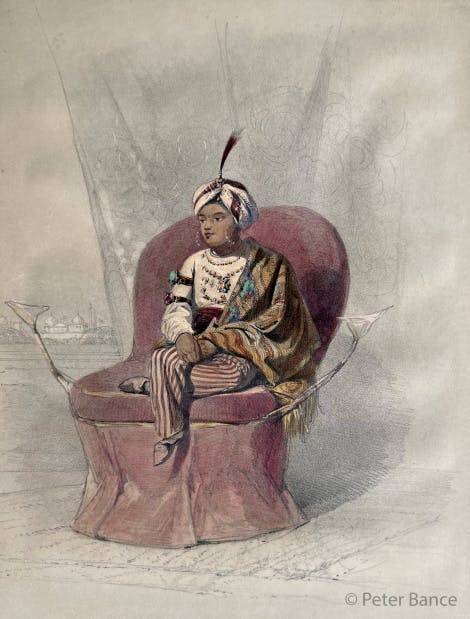
Image: The Young Maharaja Duleep Singh. © Peter Bance
Duleep Singh, the 5-year-old Maharaja
Maharaja Duleep Singh was born in Lahore, in modern-day Pakistan, on 6 September 1838, to Maharaja Ranjit Singh (1780–1839) and Rani Jindan Kaur (1817–1863).
Known as the 'Lion of Punjab', his father Ranjit Singh was the first Sikh Maharaja of the Punjab and Sikh Empire, in modern-day eastern Pakistan and north-western India.
After his father’s death, a series of successors were killed. Finally, Duleep Singh was declared Maharaja at just 5 years old.
The Punjab surrendered
The British, through their agents in the East India Company, were quick to exploit the unstable situation in the Punjab. After two Anglo-Sikh wars, the Company took control of the region. The Maharaja, still only 10 years old, was forced to surrender his lands and the prized Koh-i-Noor diamond.
In return, he was granted a pension, provided he 'remain obedient to the British Government'.
Duleep Singh in exile
After taking the Punjab, the British East India Company moved the Maharaja southeast to Fatehgarh, in modern day Uttar Pradesh, India.
Under the guardianship of British army surgeon John Login and his wife Lena, who were devout Christians, Duleep Singh converted to Christianity. The following year he travelled to England.
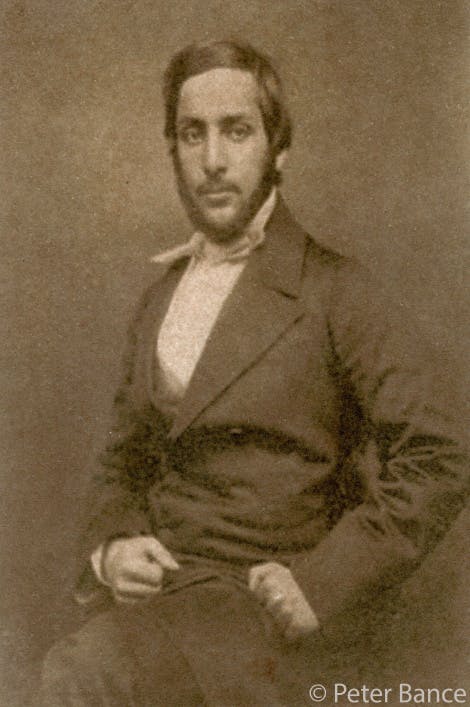
Image: The Maharaja with his haircut shortly after he arrived in Britain in 1854. © Peter Bance
The Maharaja of the Punjab meets the Empress of India
Duleep Singh first met Queen Victoria in 1854. He greatly impressed the Queen who described him in her journal as ‘extremely handsome, speaks English perfectly, and has a pretty, graceful and dignified manner’.
Rather ironically, she added: ‘I always feel so much for these poor deposed Indian Princes.’
Victoria took a close interest in his education, although he was denied a request to go to university.
Duleep Singh often visited the Royal Family at Windsor and Osborne. As a new member of the English aristocracy, he attended dinners, shooting parties and balls.
But he longed to return to India and to see his mother.
A mother and son reunited
In 1861, after 12 years apart, Duleep Singh and his mother, Maharani Jind Kaur reunited in a grand hotel in Calcutta (now Kolkata), with British government representatives in attendance. The British government had consented to the idea, believing that the aged Maharani no longer posed a threat. The pair travelled to England and became inseparable.
The Maharani encouraged Duleep Singh to enquire about his private lands in the Punjab. Perhaps to placate the young Maharaja, the British increased his pension and gave him a large grant towards the purchase of a castle in Gloucestershire.
The Maharani died suddenly in 1863. Inconsolable, her son took her body to India for cremation.
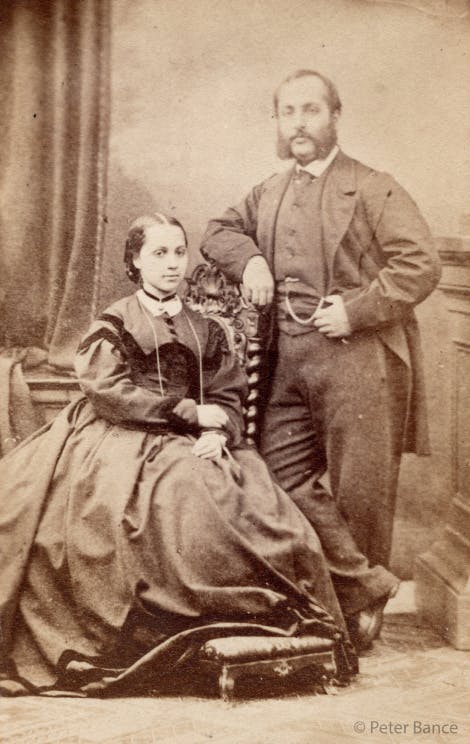
Image: Maharaja Duleep Singh and his wife, Maharani Bamba, c.1868. © Peter Bance
Marriage to Bamba Müller and life at Elveden
Travelling back to India via Egypt, Duleep Singh met Bamba Müller who worked at a local mission school. The couple married in 1864 and were welcomed back to Britain by Queen Victoria.
The couple moved to Elveden in Suffolk. The Maharaja loved his new estate, and he remodelled the interior to resemble the Indian palaces of his childhood.
Elveden became famed for shooting game, his favourite pastime. However, his extravagant lifestyle caused frequent disputes with British authorities.
Duleep Singh and Bamba Müller's children
Five of Bamba and Duleep Singh’s seven children survived infancy; each had their own relationship with life in Britain and their heritage as children to the Maharaja and Maharani of the Punjab.
Infant Duleep Singh
Infant Duleep Singh was born in 1865, the first son of Maharaja Duleep Singh and Maharani Bamba. He died soon after his birth, and was buried in Perthshire.
Victor Duleep Singh
Victor often used the title Shahzadah, meaning ‘son of a Shah’. Victor Duleep Singh was born in 1866. He was educated at Eton College, and Trinity College, Cambridge. He gained special dispensation from his godmother, Queen Victoria, to join the Royal Military Academy at Sandhurst in 1887, and held several positions in the army until he resigned in 1898.
Victor married Anne, the daughter of the 9th Earl of Coventry. During the First World War, he was asked not to leave Paris; he died in Monte Carlo in 1918.
Frederick Duleep Singh
Frederick Duleep Singh was born in 1868 and educated at Eton College (a prestigious boarding school) and Cambridge University. He then lived in Norfolk, in the east of England, until the end of his life. He spent his last 20 years at Blo Norton Hall, a moated Elizabethan house.
Frederick was interested in living archaeology, architecture and genealogy, particularly related to East Anglia. He collected English artefacts, wrote for several periodicals, and helped preserve several Norfolk churches. He bought the Ancient House at Thetford, which he gave to the town as a museum. He died in 1926, and was buried in the churchyard at Blo Norton.
Bamba Sutherland (nee Duleep Singh)
Bamba Sofia Jindan Duleep Singh was born in 1869, the Maharaja and Maharani’s first daughter. Along with her sister Catherine, she attended Somerville College, Oxford University from 1890 to 1894. She married Lieutenant-Colonel David Waters Sutherland in 1915.
Bamba considered herself heir to her grandfather Ranjit Singh’s empire, describing herself as ‘The Queen of Punjab’. She visited India with her sisters, and returned to live in Lahore in the 1940s. She died there in 1957.
Catherine Duleep Singh
Catherine Hilda Duleep Singh was an active suffragist who became a 'guarantor' to Jewish refugees escaping Nazi Germany, and an icon for LGBTQ+ South Asian women.
Catherine was born in 1871, the second daughter of Maharaja Duleep Singh and Maharani Bamba. She spent much of her life in Germany with her partner, Lina Schaeffer.
Sophia Duleep Singh
Sophia Jindan Alexandrovna Duleep Singh was born on 8 August 1876, the second daughter of Maharaja Duleep Singh and Bamba Müller. She was a prominent Suffragette and goddaughter of Queen Victoria.
Sophia used her wealth, her position in society and her strength of character to fight for women’s rights. During the First World War, she fundraised and nursed the thousands of Indian soldiers who fought for the Allies.
Albert Edward Duleep Singh (called Edward)
Albert Edward Alexander Duleep Singh was born in 1879, the youngest child of Maharaja Duleep Singh and Maharani Bamba. He performed well at his private boarding school, and his report card for 1891 showed praise for his work; he was due for Eton College afterwards, but he contracted pneumonia in 1892. He died in 1893, aged just 13.
Conversion back to Sikhism, and Paris
Duleep Singh converted back to the Sikh faith in 1886 and moved to Paris. He spent his last six years trying to reclaim the Punjab from the British. His increasingly-elaborate plans included conspiring with Russian and Irish revolutionaries. One of these, Patrick Casey, had been involved in a plot to assassinate Queen Victoria.
While her husband conspired in Paris, Bamba and the children were left to deal with the consequences in London. Abandoned by many of her friends, Bamba died in 1887. The children were taken into the care of a guardian chosen by Queen Victoria.
Marriage to Ada Wetherill
In 1889, Duleep Singh married Ada Wetherill, an English woman with whom he had reportedly had an affair.
The couple had met when she was a teenage chambermaid at Cox’s Hotel in St James’s, London. At the time, Duleep Singh was married to Maharani Bamba.
Ada joined Duleep in Paris in 1886 after he fled to France and abandoned his family.
The couple had two daughters, but Ada became frustrated with her aging husband and the couple became estranged. Ada died in 1930.
Did you know?
Even after Duleep was ‘forgiven’ by Queen Victoria, she refused to meet Ada out of respect for Bamba.
Duleep Singh and Ada Wetherill's children
Pauline Duleep Singh
Pauline Alexandrina Duleep Singh was born on 26 December 1887 in Russia to Maharaja Duleep Singh and Maharani Ada. At the time, her father was conducting an unsuccessful campaign to enlist the support of Tsar Alexander.
In 1914, Pauline married Lieutenant John Shirley Archibald Torry; he died fighting in the First World War in 1915. In the late 1930s, she moved to Paris, but contracted tuberculosis around the time of the breakout of the Second World War. Pauline died alone in 1941 at a sanatorium.
Ada Irene Duleep Singh
Ada Irene Helen Beryl Duleep Singh was born in 1889 in Paris, the youngest child of Maharaja Duleep Singh and Maharani Ada. In 1890, her mother left her father, taking Irene and her older sister Pauline with her.
When Duleep and Ada reconciled and returned to England, Pauline and Irene were left in the care of their nanny in Paris. Irene lived with mental illness, and died by suicide in 1926.
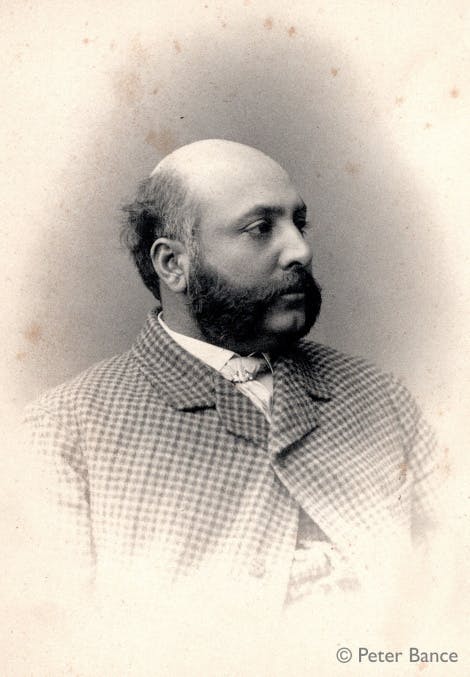
Image: Maharaja Duleep Singh in 1885. © Peter Bance
The death of Duleep Singh, the last Maharaja
In 1890 Duleep Singh suffered a stroke. Infirm and without friends or money, he became reconciled with Queen Victoria. The Queen granted him a royal pardon, to the dismay of her ministers.
The Maharaja died in Paris on 22 October 1893. His children had him buried next to Bamba at Elveden. Representatives of Queen Victoria were among the mourners at his funeral.
Perhaps from the perspective of some British officials, a turbulent chapter in the history of the British Empire seemed to close with the death of Duleep Singh, the last Maharaja of the annexed Punjab who never gave up fighting to reclaim his ancestral lands.
Suggested further reading
- Priya Atwal, Royals and Rebels: The Rise and Fall of the Sikh Empire (London, 2020)
- Peter Bance, Sovereign, Squire & Rebel: Maharaja Duleep Singh & The Heirs of a Lost Kingdom (London, 2009)
- William Dalrymple and Anita Anand, KOH-I-NOOR: The history of the world’s most infamous diamond (London, 2017)
- Lena Campbell Login, Lady Login's Recollections: Court Life and Camp Life, 1820-1904 (London, 1916)
Browse more history and stories

Sophia Duleep Singh
The Punjabi Princess who fought for women's rights
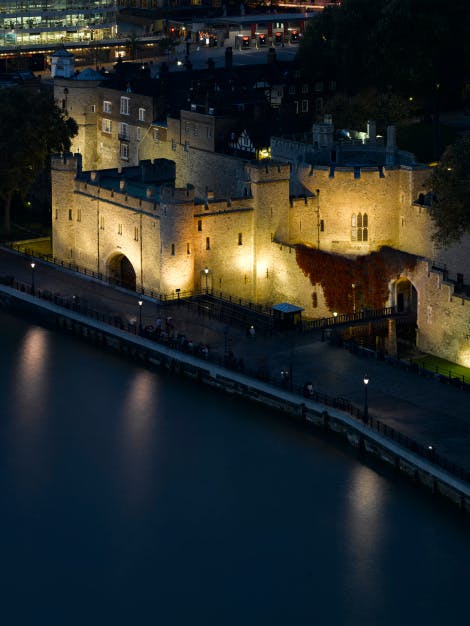
The story of the Tower of London
Iconic fortress, royal palace and infamous prison.
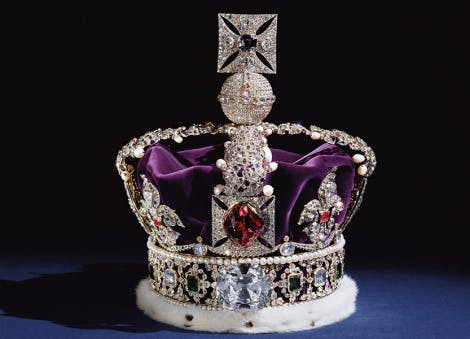
The Crown Jewels
The history of the Crown Jewels, including the Imperial State Crown - a priceless collection used to crown the kings and queens of England.
Explore what's on

- Exhibition
- Things to see
The Last Princesses of Punjab
Discover the extraordinary life of Sophia Duleep Singh and the women interwoven in her rich and complex heritage.
-
Dates:
Until 08 November 2026.
- Location: Kensington Palace
- Ticket type: Included in palace admission. (Members go free, no pre-booking required)
- Things to see
The Crown Jewels
Discover the dazzling history of the Crown Jewels in the spectacular Crown Jewels exhibition.
-
Dates:
Open
- Times: Allow one hour
- Location: Tower of London
- Ticket type: Included in palace admission (Members go free)

- Exhibition
- Things to see
The Indian Army at the Palace
Explore the forgotten story of Indian Army soldiers who camped at Hampton Court Palace in the early 20th century, through a new exhibition of previously unseen objects, photographs, film and personal stories.
-
Dates:
Closed
- Location: Hampton Court Palace
- Ticket type: Included in palace admission (Members go free)
Shop online

Shop Kings & Queens of England
Discover our informative and best selling range, inspired by the incredible history of the Kings and Queens of England.
From £4.99

Shop Crown Jewels
For centuries, the Tower of London has safeguarded and showcased the illustrious Crown Jewels, discover our range inspired by these majestic objects.
From £2.50