

Queen Victoria had both a real and symbolic role in the expansion of the British Empire during her reign. Its effects are still felt today.
Even though the seeds of the British Empire were sown long before she reigned, and the Empire itself continued after her death, Queen Victoria's reign coincided with the height of British imperial expansion. At its head, Victoria helped reinforce perceptions of imperial authority, stability, shared identity, legitimacy and benevolence – even as her subjects in Britain’s colonies abroad were exploited.
Victoria's roles were both real and symbolic; as a constitutional monarch, her practical powers were limited. On the other hand, her image as a benevolent ‘face’ of the Empire was arguably one of the most widespread and effective strategies employed by British officials to conceal the violent, authoritarian reality of British rule.
Empire
An empire is a large political entity in which multiple populations are ruled by force from a single centre.
Imperialism
Imperialism is a set of beliefs and policies that favours the maintenance and expansion of empire.
Colonialism
Colonialism is a system of ideas, ideals and practice that involves the political, economic and cultural domination of a population by imperial rulers.
When did the British Empire start?
The story of what would become known as the British Empire starts with the Tudors. Edward VI, Mary I, and Elizabeth I all granted charters to merchant companies to explore new territories and trade.
In 1600, Elizabeth I granted a charter to the British East India Company to operate in Asia.
Under James I, the first permanent settlement was created in North America. By 1740, Britain had created 13 colonies there, but these declared themselves independent in 1776.
The British Empire expands in the Victorian period
What we now understand as the British Empire came together during the long reign of Queen Victoria, which ran from 1837 to 1901.
The Victorian era is characterised by rapid industrialisation, political changes and the expansion of the British Empire. The Empire expanded its territories, as well as its political and military power. This enabled the British to eventually control and profit from a quarter of the entire world’s population, with Queen Victoria as their head of state.
The expansion of the British Empire in India
From 1757, the British East India Company began gaining more control in India; the economic gains made in India and fed directly into the Industrial Revolution. In 1858, most of India came directly under the rule of the British government, represented by Queen Victoria as the monarch.
The expansion of the British Empire in Africa
In the 1880s, what is known as the ‘scramble for Africa’ began between Europe, the USA and the Ottoman Empire, which led to increasing British control of several African kingdoms, at huge cost to African lives, culture, and resources.
When was the Victorian era?
The Victorian era is often seen as the period between 1815 and 1914. It does not correspond exactly to Queen Victoria’s reign, which ran from 1837 to 1901.
The Victorian British Empire in context
Britain wasn’t the only empire operating in the 19th and 20th centuries. One way in which 19th-century British and European empires were different from many previous empires was that they constructed an imagined hierarchy of peoples with Christian Europeans at the top, and used this to justify giving people different rights and privileges based on their race and religion.
Nineteenth-century British imperialism, under Queen Victoria, was based on ideas of the racial and religious superiority of white, Christian people. The highest power rested with the British parliament and the monarch. The colonising and colonised people were separated culturally and socially.
Which countries were part of the British Empire?
The British Empire itself consisted of territories that came under multiple types of political and economic control by Britain. Some of these were direct colonies, such as India (from 1858), Barbados, Gibraltar, Hong Kong, and New Zealand.
Others, such as Aden (now Yemen), Cyprus (until 1914), Zanzibar, and Afghanistan, were under different levels of political and economic control. This control changed over time, including during Queen Victoria’s reign.
India: The ‘Jewel in the Crown’ of the British Empire
India brought immense economic benefits and prestige to the British as part of the Empire. India became the 'jewel in the crown' of the British Empire.
By the early years of Victoria’s reign, the East India Company faced increasing opposition in India, as well as criticism in the British parliament. In 1857, this exploded into widespread rebellion in India. At home, Victoria anxiously pored over newspaper reports, worried about reports of rebel violence against the British.
Victoria received official government reports about these developments, but she also tried to gather personal intelligence. For example, Charlotte Canning had been her Lady of the Bedchamber, but in 1856 Charlotte went to India with her husband Charles when he was appointed governor-general. The Queen relied on Lady Canning for information about what was really happening in India, and asked her whether the reports of violence were true.
In 1858, India came directly under British rule, ushering in the era of the British Raj.
What was the British Raj?
The British Raj is the period of direct Crown rule over India from 1858 to 1947.

Image: An illustration depicting Lord Lytton proclaiming Queen Victoria as Empress of India at Delhi in 1877, published in 1901. © Historic Royal Palaces
Victoria becomes Empress of India
Although she never went to India, Victoria coveted the title of Empress of India. She called herself Empress from 1858 when the British Crown took over political control of India. She was officially accorded the title on 1 January 1876.
In the 1880s, the Empress invoked India and her other colonies around her through the presence of objects, art and architecture, through ceremonial and spectacular occasions such as the Colonial and Indian Exhibition.
Such a document should breathe feelings of Generosity, Benevolence, and Religious feeling, pointing out the privileges which the Indians will receive in being placed on an equality with the subjects of the British Crown & the prosperity following in the train of civilisation.
Queen Victoria, telling her Prime Minister the message she wanted to send to her Indian subjects in her 1858 Proclamation

Image: Queen Victoria with her son Albert Edward (later King Edward VII), her grandson Prince George (later King George V) and her great-grandson Prince Edward (later Edward VIII). © Historic Royal Palaces
Queen Victoria, the motherly ‘face’ of the Empire
As Queen, Victoria’s image represented British authority. The perception of her as a motherly, respectable symbol of the era was so ubiquitous that it’s still recognised today.
Surrounded by Prince Albert and their nine children, Victoria created an image of an ‘ideal’ family. Her role as a wife and mother came to represent her role as Head of State in Britain, and helped people relate to her.
This image as a universal mother figure proved useful for the British Empire. Known as the ‘Mother of the Empire’, Victoria became the respectable, benevolent face of empire.
When Albert died in 1861, Victoria mourned him publicly to maintain the image of a devoted wife and mother. She wore black in public for the rest of her life, earning the nickname the ‘Widow of Windsor’.

Image: Queen Victoria and her family at Osborne in around 1896. © Historic Royal Palaces
Victoria the godmother
The Queen’s close relationships with colonial subjects
By this time, the British Empire was firmly entrenched in ideals of the racial superiority of white people; it saw the colonies of its racially marginalised subjects as in need of ‘civilising’.
To this end, Victoria surrounded herself with several wards and godchildren from various corners of her Empire, including Duleep Singh, Abdul Karim and Omoba Aina (‘Sarah Forbes Bonetta’).
Victoria saw these children as subjects who could be rescued, if not civilised through British culture, customs and religion. This made perfect sense with imperial logic; the British government used this same reasoning to continue its imperial expansion.
It was especially important to Victoria that all of her wards came from royal or noble lineages. She expressed concern about their loss of status as a result of coming under the dominion of the British Empire. However, she also gave a pragmatic reason for publicly according them elite positions within British society: ‘... the more consideration we show for their birth and former grandeur… the more ready will they be to come under our rule.’

Image: Silver medal commemorating the Golden Jubilee of Queen Victoria, showing the Queen in profile. © Historic Royal Palaces
Jubilees – a celebration of a 'unified' Empire?
Occasions such as jubilees were particularly powerful for spreading the image of Victoria as the benevolent face of a civilising Empire, through commemorative crockery, stamps, coins, and posters.
At celebrations for her Diamond Jubilee, Victoria sent a telegram to her imperial subjects, attempting to project the narrative of a unified Empire.
In reality, this unified empire did not exist. The sentiments celebrated in Britain, of Victoria as ‘the visible impersonation of the predominance of the British race’, were increasingly rejected by her subjects elsewhere. Victoria’s first statue in India, once installed with pomp and ceremony in Bombay (now Mumbai) in 1870, was tarred in protest during the 1897 Jubilee and removed.
From my heart I thank my beloved people. May God bless them.
Queen Victoria’s telegram to her imperial subjects on her Golden Jubilee
The realities of British rule
Victoria’s public profile as a benevolent figure allowed imperial Britain to present an acceptable imageof liberalism and inclusivity.
Paradoxically it governed its overseas colonies as an authoritarian, and often racist, imperial power.
The Opium Wars with China
The Opium Wars were a series of 19th-century conflicts caused by British traders smuggling opium from its Indian colonies into China – where the highly-addictive drug was banned.
The British repeatedly ignored the Chinese government’s protests over the illegal trade. The Chinese even wrote to Queen Victoria, but this too was ignored and the trade continued, in turn feeding Britain’s own addiction to tea. The conflict escalated into war.
Two so-called Opium Wars followed on Chinese shores. The conflict was only ended after a series of unequal treaties that humiliated China and served British trade interests.
Despite remarking on the ‘untold evils in all classes’ caused by opium addiction in England, Queen Victoria seemed more comfortable with opium being traded in China.
The process of manufacturing opium for the Chinese market was even displayed at the Great Exhibition after the first Opium War, with the Queen describing it as ‘excessively curious’.
Did you know?
Opium is a highly-addictive drug made from poppy seeds. In the 19th century, British traders grew the poppy seeds in British Indian territories. They then sold the opium into China, where the drug was outlawed but in high demand.
The Indian rebellion of 1857
Indian sepoys, or soldiers, hired by the colonial government had been compelled to fight many wars for Britain’s interests – from Afghanistan and Burma to the Opium wars and the Crimean war. Sepoys could not progress through the ranks beyond a certain point, and many sepoys came from small landowning families, whose lands came under increasing revenues imposed by the East India Company.
The British introduced new Enfield rifles with greased cartridges, which had to be bitten to be reloaded quickly. Fearing that these were greased with beef and pork – which offended Hindu and Muslim religious sensibilities – the sepoys mutinied. But the rebellion went far beyond the sepoys, and affected huge sections of India controlled by the East India Company.
Civilians as well as local rulers joined in for many reasons – from religious reasons, to the heavy revenues collected by the Company, as well as the pressure on farmers to grow crops for export. Not all sepoys supported the rebellion, which was largely restricted to soldiers of the Bengal Army.
The rebels lost in 1858, and faced systematic and violent reprisals from the British which had long-term consequences for India. This included mass executions, and the destruction of entire villages. Land was confiscated on a large scale, landowning systems were changed, key symbols such as palaces and courts were looted and destroyed.
It is an event of paramount importance in the history of the Indian subcontinent – it led to the dissolution of the East India Company, and India coming directly under the British government, represented by the Crown, i.e. Queen Victoria.
In 1856, Queen Victoria introduced the Victoria Cross Medal to honour those British and colonial soldiers who fought in these wars on her behalf. The most Victoria Crosses ever awarded (numbering 24) on a single day was on 16 November 1857 for the siege of Lucknow.
Famine in Ireland and India
In 1800, the Irish parliament was abolished, and Ireland came under direct British rule. The Great Famine in 1845 to 1852 had devastating consequences, as did a series of famines in India, most notably in 1876 to 1878.
In both places, the colonial authorities’ actions greatly exacerbated the famines. Irish revolutionary Maud Gonne nicknamed Victoria ‘the Famine Queen.’
Meanwhile, the excesses of the Delhi Durbar organised by Lord Lytton during the Madras Famine meant that while millions of poorer Indians perished of starvation, 68,000 Indian elites attended the lavish ceremony.
The construction of the global capitalist grain market and resulting speculation ensured that although India had produced more than enough food for the three years preceding the Madras Famine, there was an acute food shortage when the famine hit. In both Ireland and India, anyone receiving famine relief had to perform physical labour for it; rations were meagre.
Such was the force of critical opinion in the vernacular press following the Delhi Durbar of 1877 that the Government of India under the Viceroy Lord Lytton was compelled to pass the Vernacular Press Act of 1878 to suppress it.
How did Victoria's imperial subjects see her?
Changing perspectives
Perspectives on the Queen-Empress in the colonies shifted over time and place.
In Nagpur in India, a new cotton factory by industrialist Jamsetji Tata, initially named ‘Empress Mills,’ was renamed in 1886 to ‘Swadeshi Mills’. Changes like this signalled a shift from imperial to nationalist politics; ‘swadesh’ means one’s own country and the Swadeshi movement was the Indian name for the nationalist (anti-British) movement.
A humanising route for appeal?
Even though the Queen was seen as the ultimate representation of the Empire, her benevolent image meant that colonial subjects often distinguished her from the authorities on the ground. She was seen as someone who could be personally appealed to, and perhaps believed to have more power and desire to make changes than she really possessed.
For example, when Wajid Ali Shah, the last King of Awadh, was deposed by the British in 1856, his mother and her entourage made a long but ultimately futile journey to London to appeal directly to Victoria.
Elsewhere, indigenous people in Canada, Australia, South Africa, and New Zealand, used treaty medals which bore the Queen’s image, name and person to appeal for their own rights.
Far from being passive recipients of the imperialist project, or of the sentimental idea of Victoria as the Mother of Empire, indigenous people also deployed sentiment towards and about Victoria strategically, even as her political powers came to be recognised as more symbolic than real.
Colonised people who approached her directly understood this change. For example, while the chiefs of Bechuanaland visited her in 1895, they did not expect to appeal to her to stop their territories from being taken over by Cecil Rhodes’ South Africa Company.
The British Empire after Victoria's death
Queen Victoria died in 1901. The official announcement of her death was made through telegraph. Many colonial cities received the news at the same time.
The Empire continued after her death, but declined after the Second World War, with its colonies achieving independence between the 1940s and 1990s. Remnants of the Empire still exist in the form of the British Overseas Territories.
Dominion status was granted to Canada, Australia, New Zealand, the Union of South Africa, the Republic of Ireland and Newfoundland. These countries became autonomous, but still owed allegiance to the British monarch. They later joined the Commonwealth of Nations, an Association of independent countries that are mostly former territories of the British Empire.
Did you know?
Majority white colonies such as Canada achieved dominion status far before such a thing was possible for Victoria’s Asian or African territories. But this occurred through the widespread displacement, death and erasure of indigenous populations and cultures.
The long-term effects of British imperialism
The empire has a complex and enduring legacy, which people all over the world continue to reckon with. It connected the world in some ways, but it also entrenched systems of inequality with profound consequences for many people today.
English became either the dominant or official language in many former British colonies, affecting the use of indigenous languages such as te reo Māori (the Maōri language). There have been concerted efforts to revive many of these languages.
A well-known British imperial legacy is the looting of cultural artefacts; intense debates continue about the return of such objects as the Benin Bronzes.
The Koh-i-Noor diamond is among one of the most visible symbols of the British Empire. Victoria wore this diamond as a brooch, and it is now set in the Crown of Queen Elizabeth the Queen Mother – part of the Crown Jewels.
But there are wider, lesser-known legacies of the Empire.
The scale of famine in British overseas colonies was multiplied by imperial policy, which forced farmers to grow produce to sell instead of growing food for local people.
The British Empire also left an environmental legacy through the extraction of natural resources, deforestation, and a move from subsistence farming to commercial agriculture.
Researchers are also uncovering the systematic violence and subjugation that was deployed throughout the British Empire – from Canada to South Africa, and from Palestine to Cyprus – while being cloaked under a more liberal veneer.
A reckoning?
Queen Victoria’s Imperial legacy reexamined
Queen Victoria actively shaped her imperial legacy through her participation in highly publicised events such as colonial exhibitions, and through her favouring of pro-Empire government leaders. Government officials in both Britain and the colonies used her image to create the narrative of a benevolent and liberal empire, with her knowledge and consent.
Her image as the humanising face of the British Empire perhaps makes it possible for some to ignore or downplay the violence experienced by her imperial subjects even now. But alongside romanticised portrayals of this history, the way Victoria is memorialised is being challenged.
For example, in 2021, a statue of Victoria was pulled down in the Manitoba legislature in Canada after the unmarked graves of indigenous children were found at residential schools established for colonial interests.
The deployment of Queen Victoria as the face of benevolent imperialism was arguably one of the most widespread and effective strategies concealing this violence. The consequences continue to reverberate throughout the world in the form of economic and racial inequalities, as well as political instability and regional long-term tensions.
Browse more history and stories
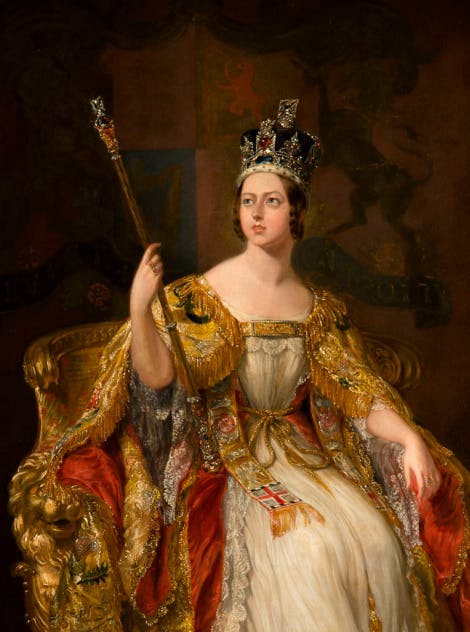
Queen Victoria
From pampered princess to elderly empress: wife, mother and queen

The story of Kensington Palace
An elegant retreat for Britain's royal family
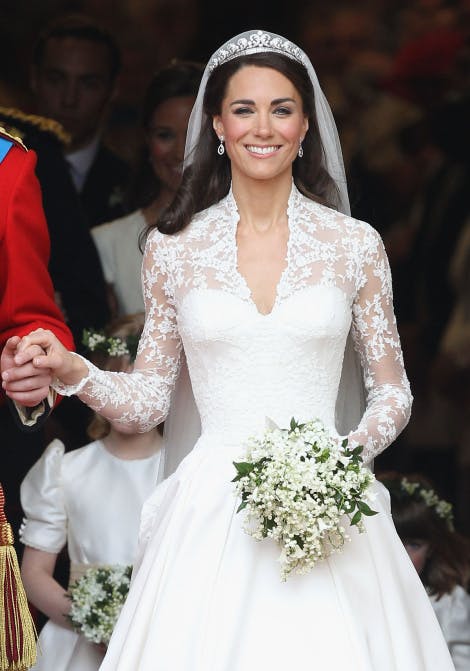
A history of royal weddings
From Queen Victoria to the modern royals
Explore what's on

- Exhibition
- Things to see
The Last Princesses of Punjab
Discover the extraordinary life of Sophia Duleep Singh and the women interwoven in her rich and complex heritage.
-
Dates:
Until 08 November 2026.
- Location: Kensington Palace
- Ticket type: Included in palace admission. (Members go free, no pre-booking required)
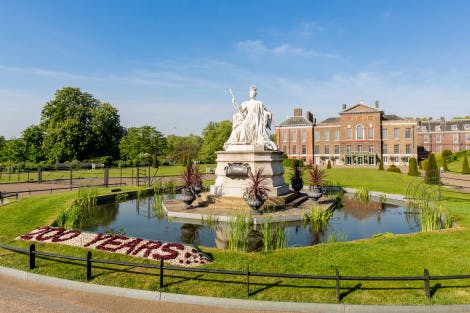
- Things to see
The Palace Gardens
Walk in the footsteps of royalty in the beautiful Kensington Palace gardens.
-
Dates:
Open
- Times: 10:00 - 18:00. Last entry 17:45.
- Location: Kensington Palace
- Ticket type: Free

- Things to see
Victoria: A Royal Childhood
Discover the story of Princess Victoria, the young girl destined to be queen, in the rooms where she was born and raised at Kensington Palace.
-
Dates:
Open (Closed on 27 - 28 April)
- Times: In line with palace opening hours
- Location: Kensington Palace
- Ticket type: Included in palace admission (Members go free)
Shop online

Percy & Reed’s Royal Blossom Range
Created in collaboration with Historic Royal Palaces, Percy & Reed’s Royal Blossom range will have you feeling like royalty from head to toe.
£40
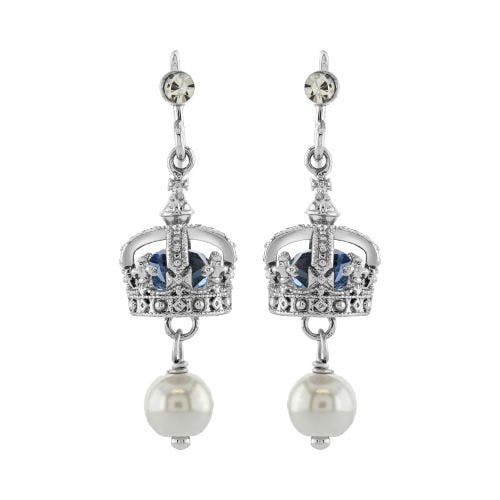
Queen Victoria's Diamond Crown Pearl Drop Earrings
Exclusive to Historic Royal Palaces, these beautiful earrings are inspired by Queen Victoria's iconic small diamond crown.
£35.00