

William IV was King of Great Britain and Ireland from 1830 to 1837, and the last monarch of the Hanoverian dynasty.
William IV was frugal, informal and a far cry from his outrageous brother, George IV. His naval career, which included service in the American Wars of Independence, earned him the nickname the ‘Sailor King’.
Raised as one of many ‘spare’ heirs to the throne, William did not expect to become King. As Duke of Clarence, he lived with actor Dorothea Jordan (known as ‘Mrs Jordan’) and their 10 illegitimate children in Bushy Park, near Hampton Court Palace.
In need of a wealthy wife and an heir, William later left Dorothea and married Princess Adelaide of Saxe-Meiningen at Kew Palace. Despite competing in the famous ‘baby race’, the couple produced no surviving heirs.
At 64 years old, William IV became the oldest king to ascend the British throne.
He died just seven years into his reign and was succeeded by his niece, Queen Victoria.
Header image: King William IV in 1833-34 © Royal Collection Enterprises Ltd 2026 | Royal Collection Trust

Image: The coronation of William IV and Queen Adelaide in Westminster Abbey, 1831. © Historic Royal Palaces
When was William IV born?
William IV was born ‘Prince William Henry’ at Buckingham House on 21 August 1765. He was the third child of Queen Charlotte and George III, who had 15 children.
As the third son, William was thought unlikely to inherit the throne. Instead, the crown was expected to pass to his elder brothers, the Prince of Wales (the future George IV) and Frederick, the Duke of York.

Image: Prince William, Duke of Clarence, later William IV (1765-1837) c.1779. © Royal Collection Enterprises Ltd 2026 | Royal Collection Trust
William IV's childhood at Kew Palace
William grew up in and around Kew Palace. Strict tutors oversaw a structured routine with simple food, rigorous lessons and hard work on the royal family’s model farm.
The King and Queen took active and unfashionable interest in their children’s lives. William regularly visited his parents in their apartments, though these audiences were often strained and formal.
Despite this distance and discipline, William was an energetic and friendly child. He grew close to his sisters and idolised his eldest brother, the Prince of Wales.
William joins the Navy
In 1779, William joined the Royal Navy as a midshipman, aged 13. George III wanted his sons to serve their country and was anxious to distance William from the rebellious Prince of Wales.
Early in his career, William served in the American Wars of Independence. In 1780, he saw action at the Battle of Cape St Vincent and enjoyed a brief taste of glory and parental approval. He was promoted to Lieutenant in 1785 and took command of his first ship in 1786.
Did you know?
William was the subject of a failed kidnap plot in 1782 – approved by George Washington.

Image: King William IV by Sir Martin Archer Shee, around 1800. © National Portrait Gallery, London
William IV, the Sailor King?
William enjoyed his time at sea and travelled as far as Canada and the Caribbean. This service earned him the nickname ‘the Sailor King’. But the prince never excelled as a naval officer, and he damaged his reputation with indiscreet love affairs and petty quarrels with other officers.
William left active service in 1790. In 1811, he was made Admiral of the Fleet and became Lord High Admiral in 1827. However, William clashed with the Admiralty and resigned his post after a year.
William adrift: The bawdy Duke of Clarence
In 1789, William became Duke of Clarence and St Andrews and Earl of Munster. Despite these titles, he struggled to find purpose outside the Navy. Instead, he bemused polite society with crude humour and informal manners inherited from years at sea.
Despite his bawdy reputation, William craved domestic stability. But the prince could not marry without the King’s permission. This limited his potential brides to non-Catholic foreign royalty.

Image: Dorothy Jordan by John Hoppner. © National Portrait Gallery, London
'Mrs Jordan'
William’s life with Dorothea Jordan
In 1790, William met successful Anglo-Irish actor, Dorothea ‘Dora’ Jordan. By 1791, the pair practically lived as husband and wife.
Who was ‘Mrs Jordan’?
Born Dorothea Bland in 1761, Dora began her career in Dublin but fled Ireland to escape an unhappy relationship. Unmarried and obviously pregnant, she took the stage name ‘Mrs Jordan’ – reflecting her symbolic ‘crossing of the Jordan’ in coming to England.
Best known for comic roles, Dora dazzled audiences with her cheerful wit and charm. She became one of the most famous actors of her day and regularly performed on tours and at the Theatre Royal, Drury Lane.
Dora and William
William could not marry Dorothea Jordan; she was an actor and a commoner with three illegitimate children. But he lived openly with her, and the royal family informally accepted their relationship – the couple were obviously committed to each other, and William was unlikely to inherit the throne.
The pair settled into domestic bliss and Dora continued to perform on stage. William gave Dora an annual allowance, but her acting salary made Mrs Jordan the breadwinner for much of their relationship.
William and Dora had 10 children, each given the surname ‘Fitzclarence’. ‘Fitz’ means ‘son of’ and was a common prefix given to noble illegitimate children.
I cannot help thinking her one of the most perfect women in the world.
William about Dorothea Jordan, 1797
William and Dora’s life at Hampton Court
In 1797, William became the Ranger of Bushy Park, opposite Hampton Court Palace. He soon moved with Dora and their children to Bushy House.
Hampton Court Palace had not hosted the royal court since 1737. Instead, the palace was divided into ‘Grace and Favour’ apartments, usually granted to those who’d somehow served the crown.
William was a ‘great favourite’ of the Grace and Favour community, though he once described Hampton Court as the ‘quality poorhouse’. He regularly joined the residents for rowdy gentleman’s dinners at the ‘Toy Inn’, which stood near the Trophy Gates (the palace entrance for visitors today).

Image: William and Dora attracted a lot of press attention – particularly cruel puns on Dora’s last name, which was common slang for chamber pot. © Historic Royal Palaces

Image: Dorothy Jordan (1761-1816) as the Comic Muse, in around 1785-6. This painting was probably acquired by William IV who even after they had parted wanted 'to have all the pictures of Mrs. Jordan'. © Royal Collection Enterprises Ltd 2026 | Royal Collection Trust
Why did William IV leave Dorothea Jordan?
William and Dorothea Jordan separated in 1811. Despite 20 years together, the prince needed money and wanted to marry a wealthy heiress who might produce a legitimate heir.
Dora received a settlement of just over £4,000 a year and custody of their daughters. But these terms came with a price – if Dora resumed her acting career, she would lose both her girls and the money allotted for their care.
Sir – being on the eve of quitting this place for ever, and tho’ with sensations of regret and pleasure scarcely describable – I cannot resist the impulse I feel to express to you the sentiments of respect and gratitude I shall ever cherish for you…
Dorothea Jordan to William before leaving Bushy House, January 1812
What happened to Dorothea Jordan?
Dorothea Jordan left Bushy House in January 1812. However, even the full settlement could not cover her expenses. Dora eventually returned to the stage and reluctantly released her daughters to William. This halved her settlement to just over £2,000 a year.
Audiences still flocked to see the famous ‘Mrs Jordan’, but Dora did not make as much money as she’d hoped, and her family ran up huge debts in her name. She fled to France in 1815, where her health steadily declined.
Dorothea Jordan died alone on 5 July 1816, aged 54.
Did you know?
William commissioned a sculpture of Dorothea Jordan shortly after he became King.
Marriage to Princess Adelaide and the ‘baby race’
William took seven years to find a willing bride. Despite his best efforts, and distant chance to inherit the throne, the duke was a graceless suitor with several illegitimate children.
His search only ended after the death of Princess Charlotte – George III’s only legitimate grandchild – which created a succession crisis. William, along with the King’s other unmarried sons, were thrown into a desperate ‘baby race’ to produce a legitimate heir.
A double wedding at Kew Palace
William married Princess Adelaide of Saxe-Meiningen on 11 July 1818. Adelaide was the daughter of Louise Eleonore of Hohenlohe-Langenburg and George I, Duke of Saxe-Meiningen. William was 27 years older than Adelaide and had never met her before their betrothal.
The couple married in a joint ceremony in Queen Charlotte’s Drawing Room at Kew Palace. On the same day, William’s brother Edward, Duke of Kent married Princess Marie Louise Victoire of Saxe-Coburg.

Image: Queen Charlotte's Drawing Room at Kew Palace, where the double wedding took place. © Historic Royal Palace
She is doomed poor, dear, innocent young creature to be my wife. I cannot, I will not, I must not ill use her…
William about Adelaide in a letter to his son George Fitzclarence, 21 March 1818

Image: Fashion plate depicting Queen Adelaide in her coronation robes for her coronation, 8 September 1831. © Historic Royal Palaces
Married life
Despite never meeting before their wedding, William and Adelaide (the Duke and Duchess of Clarence) became a happy and devoted couple.
Adelaide was a kind and determined woman who quietly improved her husband’s manners and finances. She accepted William’s illegitimate children and became known for her charity work supporting widows and orphans.
Who won the ‘Baby Race’?
William and Adelaide had two daughters – Charlotte Augusta Louisa (born 1819) and Elizabeth Georgiana Adelaide (born 1820). But neither child survived infancy and Adelaide experienced at least two miscarriages. The couple had no more legitimate children.
In 1819, the Duke and Duchess of Kent welcomed their daughter, and William’s niece, Princess Alexandrina Victoria – the future Queen Victoria.
Becoming William IV
William IV became King on 26 June 1830. At 64, he was the oldest monarch to accede to the throne until Charles III in 2022.
George IV had no surviving legitimate children, and William became heir to the throne when his second brother Frederick died in 1827. After a lifetime without real purpose, the middle-aged duke enjoyed the sudden attention. William was appointed Lord High Admiral to prepare for his upcoming role as king, but he bickered with his officers and resigned after a year.
William IV was crowned at Westminster Abbey on 8 September 1831. He disliked pageantry and cancelled many traditional aspects of the coronation, including the expensive banquet. Some critics dismissed the simplified ceremony as the ‘Half Crown-nation’.

Image: Engraving of King William IV (1830-7). © Historic Royal Palaces
What was William IV like as King?
William IV was a relatively relaxed and well-liked King, particularly in the early years of his reign. He opened parts of Windsor Great Park, walked unaccompanied through London and invited random hotel guests to dine with him at the Royal Pavillion, Brighton.
The King welcomed the illegitimate Fitzclarences (his children with Dorothea Jordan) to court. His eldest son became Earl of Munster while his siblings were granted noble status. William adored his children and grandchildren, though their presence raised some eyebrows – particularly from the Duchess of Kent (William’s sister-in-law and mother of the future Queen Victoria).
William’s reign saw significant reforms, including updates to the Poor Law and restrictions on child labour. However, the King clashed with his Prime Ministers and was personally suspicious of social change.
William IV and The Great Reform Act of 1832
What was the Great Reform Act?
The Representation of the People Act (also known as ‘the Great Reform Act’) passed on 7 June 1832. It gave one-in-five men the right to vote, created new seats in parliament and abolished so-called ‘rotten boroughs’ – tiny electoral districts that could elect two MPs with very few inhabitants.
The Great Reform Act was a landmark moment in William IV’s reign that helped shape Britain’s model of democracy. But the act followed years of political upheaval and excluded women and working-class men.
What did William IV think about the Great Reform Act?
William IV was sceptical about the Great Reform Act. He worried the process of passing the bill would provoke radicalism and social unrest. But the King supported his government, who were committed to carrying out reform.
The Reform Act faced major opposition in parliament. At one point William was so annoyed by attempts to stop the bill he agreed to call a general election – the King allegedly threatened to get to Westminster in an ordinary Hackney Cab.
This decisive action earned William a brief burst of popularity. The press dubbed him ‘Reform Bill’ and urged people to ‘vote for the two Bills’.
Crisis: The Days of May
William IV’s support for reform was short lived. In 1832, the government needed him to create new peers to outnumber opposition against the bill in the House of Lords. But this request was too radical for William. He refused to intervene and the Prime Minister resigned.
This resignation sparked major unrest around the country. Known as ‘the Days of May’, protests included mass meetings, demonstrations and calls to withdraw money from the Bank of England.
The crisis frightened William, who recalled the Prime Minister and accepted his terms. In the end, the Reform Act passed without creating any more peers. But the whole affair dented William’s popularity and taught him valuable lessons about following his government’s advice.
Did you know?
In 1834, William IV dismissed Prime Minister Viscount Melbourne over policy disagreements— the last time a British monarch interfered against a majority government in the Commons.
I have my view of things, and I tell them to my ministers. If they do not adopt them, I cannot help it. I have done my duty.
William IV, 1835
The Slavery Abolition Act 1833
The Slavery Abolition Act passed on 28 August 1833. The act abolished slavery in most parts of the British Empire, but it excluded territories held by the East India Company including India, modern-day Sri Lanka and St Helena.
The act did not immediately emancipate all enslaved people: those over the age of six were designated as unpaid ‘apprentices’ for up to six years. The British government paid out around £20 million to compensate enslavers for the loss of their ‘property’.
William IV and the Abolition of Slavery
As Duke of Clarence, William IV publicly opposed the abolition of slavery.
At the time, William was the only member of the royal family to visit North America and the Caribbean, where he befriended enslavers and colonial officials. These visits made him an influential voice against abolition.
In 1799, William spoke against the Slave Trade Limitation Bill in the House of Lords. He argued that abolitionists misrepresented the treatment of enslaved Africans and that chattel slavery was essential for the wealth of the British Empire. The House of Lords rejected the bill and William's speech was published in a widely circulated pamphlet.
Despite William’s outspoken defence of enslavement, the British trade in enslaved people was abolished in 1807. As King, William gave royal assent to the Slavery Abolition Act in 1833.
The Death of William IV
William IV died of heart and liver failure at Windsor Castle on 20 June 1837, aged 71. He was buried at St George’s Chapel, Windsor.
All eyes now rested on his niece and heir, the new Queen Victoria.
William liked Victoria but had bickered with her mother, the Duchess of Kent before his death. In 1836, he had announced at dinner that he hoped to die after Victoria’s 18th birthday, so the Duchess would not become regent. Caught in the middle, poor Victoria burst into tears.
Nonetheless, William got his wish and died 27 days after Victoria turned 18. The Victorian period had begun.
The legacy of William IV
William IV reigned for just under seven years. He is best remembered as the ‘Sailor King’ whose short reign brought social reform and helped develop the model of monarchy we recognise today.
Privately, William was an informal but often crude and tactless man. He abandoned Dorothea Jordan for money and heirs but was a faithful husband to Queen Adelaide until the end of his life.
Did you know?
William IV had no surviving legitimate children, but descendants of the illegitimate Fitzclarences endure to this day, including former UK Prime Minister David Cameron.
Browse more history and stories

George III, the Complex King
Dutiful, intelligent and cultured, but cruelly labelled ‘mad’
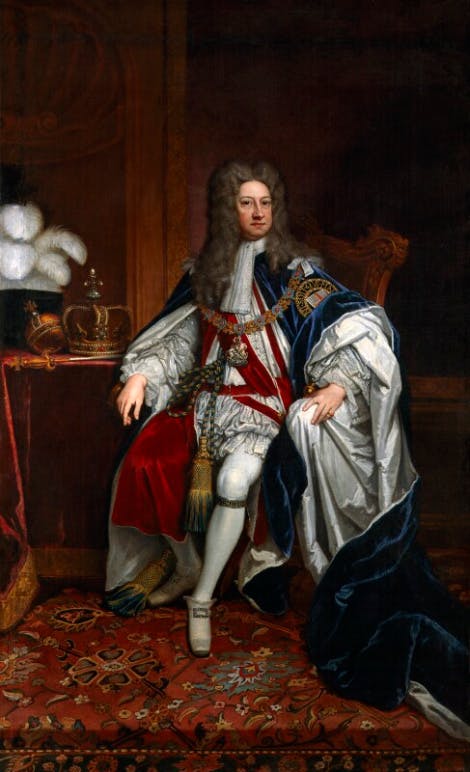
Kings and queens of the Georgian period
Who were the Georgians – the kings and their queens who gave their name to an era?
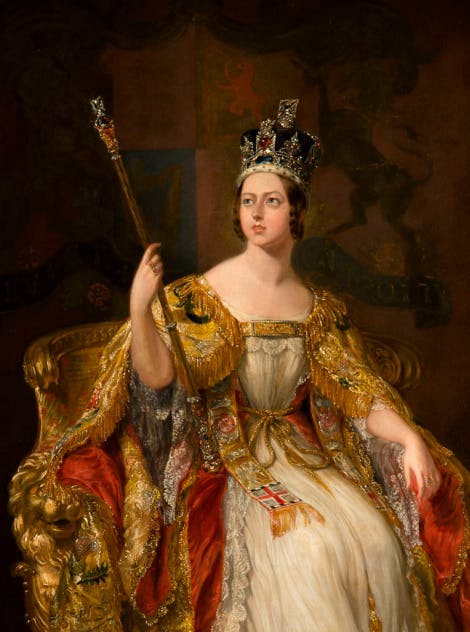
Queen Victoria
From pampered princess to elderly empress: wife, mother and queen
Explore what's on

- Things to see
The Chapel Royal
Walk in the footsteps of kings and queens in the Chapel Royal.
-
Dates:
Open Wednesday - Saturday
From Monday 06 April until further notice, The Chapel Royal can be viewed only from The Royal Pew every day. The Chapel will remain open for services only.
- Times: 10:00 - 16:00 (open for services only after 06 April)
- Location: Hampton Court Palace
- Ticket type: Included in palace admission (Members go free)

- Things to see
Cumberland Art Gallery
Discover masterpieces by Rembrandt, Caravaggio, van Dyck, and more in the Cumberland Art Gallery.
-
Dates:
Open (Subject to short notice closures)
- Location: Hampton Court Palace
- Ticket type: Included in palace admission (Members go free)

- Things to see
The Tudor World in the Wolsey Rooms
Discover the oldest rooms at Hampton Court Palace and meet the ordinary men and women who enabled the Tudor court to exist and flourish.
-
Dates:
Open
- Times: In line with palace opening hours
- Location: Hampton Court Palace
- Ticket type: Included in palace admission (Members go free)